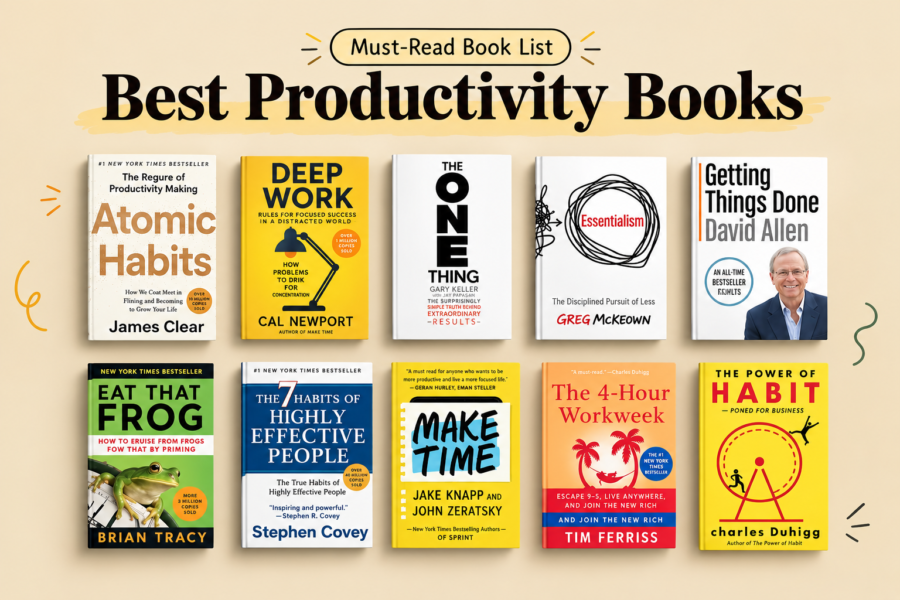
If you could read only 10 books on productivity, which ones would they be?
I’m talking about books that will make you think clearer, manage your time better and work harder.
With hundreds of collections out there; some life-changing, some recycled blog posts with fancy covers, picking a selected few wasn’t an easy task.
So, after lots of research, much deliberation, and going back and forth, here are my top 10 best books on productivity.
These have rightfully earned their spot.
1. Atomic Habits
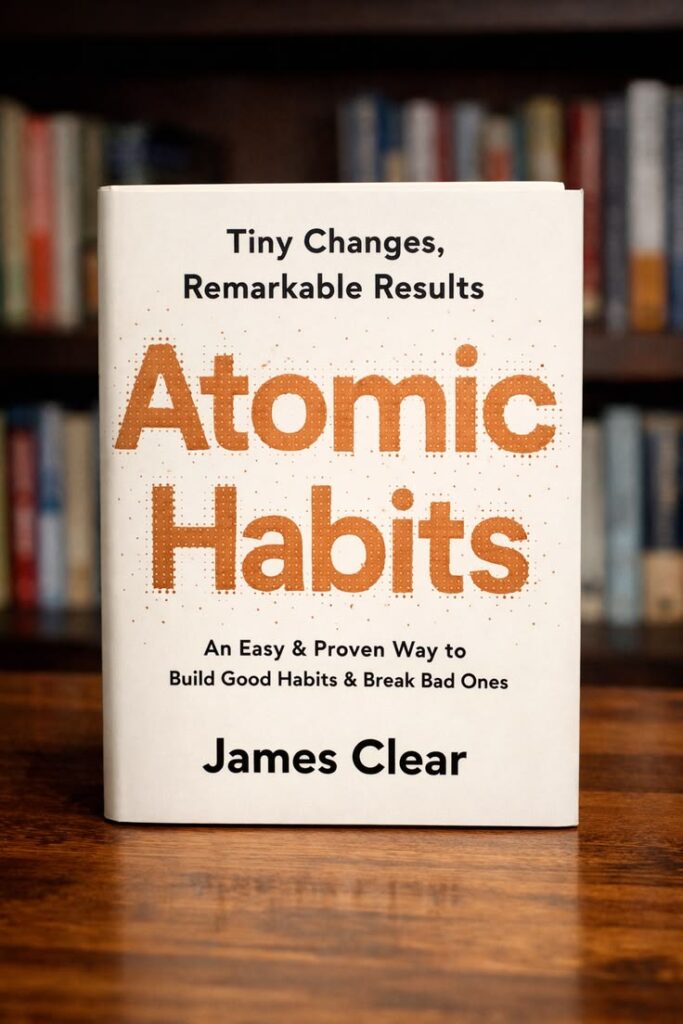
‘You don’t rise to the level of your goals, you fall to the level of your systems.’
If a sentence could summarize Atomic Habits, then it’s this. James Clear reminds us that wanting to be productive doesn’t matter nearly as much as having a structure that makes productivity automatic.
He breaks habit into a four-step loop, then shows how to tweak each part:
- Make it obvious
- Make it attractive
- Make it easy
- Make it satisfying
If you want to build a habit of reading more, put a book by your bedside. This way, it’ll be the first thing you see when you wake up. And if you want to eat healthy, spread fruits across your house; on the dining, in the kitchen and the living room.
Tiny shifts. Big ripple effects.
Atomic habits becomes your blueprint if you are looking to build anything long-term. It teaches you to make consistency predictable and sustainable.
2. Deep Work
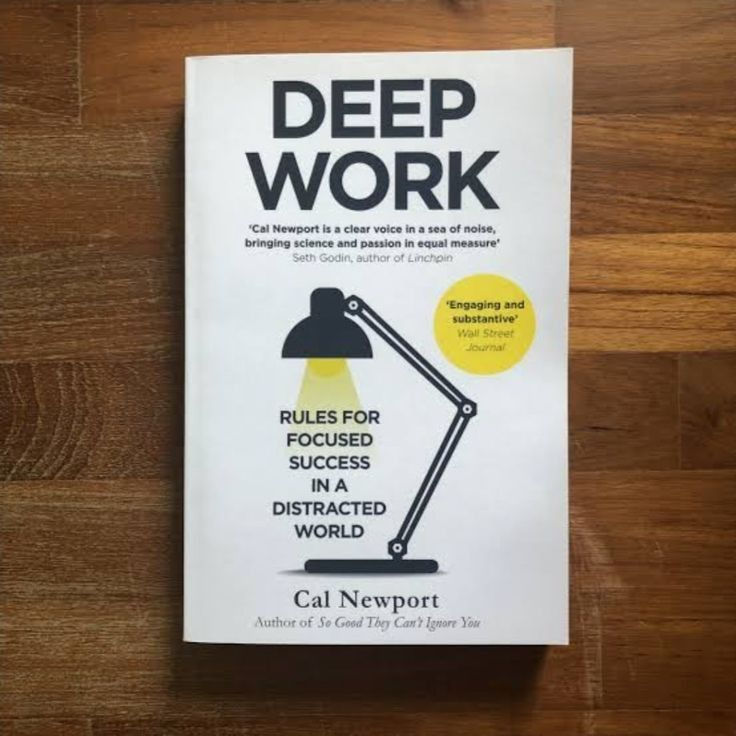
You likely don’t have a time problem, but an attention problem.
Cal Newport, in his book Deep Work, tells us that the ability to focus without distraction is becoming rare, and thereby, incredibly valuable. It is a superpower.
At a time when we are surrounded by distractions, from notifications to quick calls, being able to sit and think for two hours uninterrupted is a competitive advantage. This is deep work.
It is an intense and distraction-free concentration that pushes your cognitive abilities to their limit. This is where real output happens; the kind that moves careers forward and builds meaningful things.
The opposite is shallow work– tasks that feel productive but don’t create much value.
Deep Work teaches you to protect the attention inside your system. And once you learn how to focus deeply, your entire relationship with work changes.
3. The 7 Habits of Highly Effective People
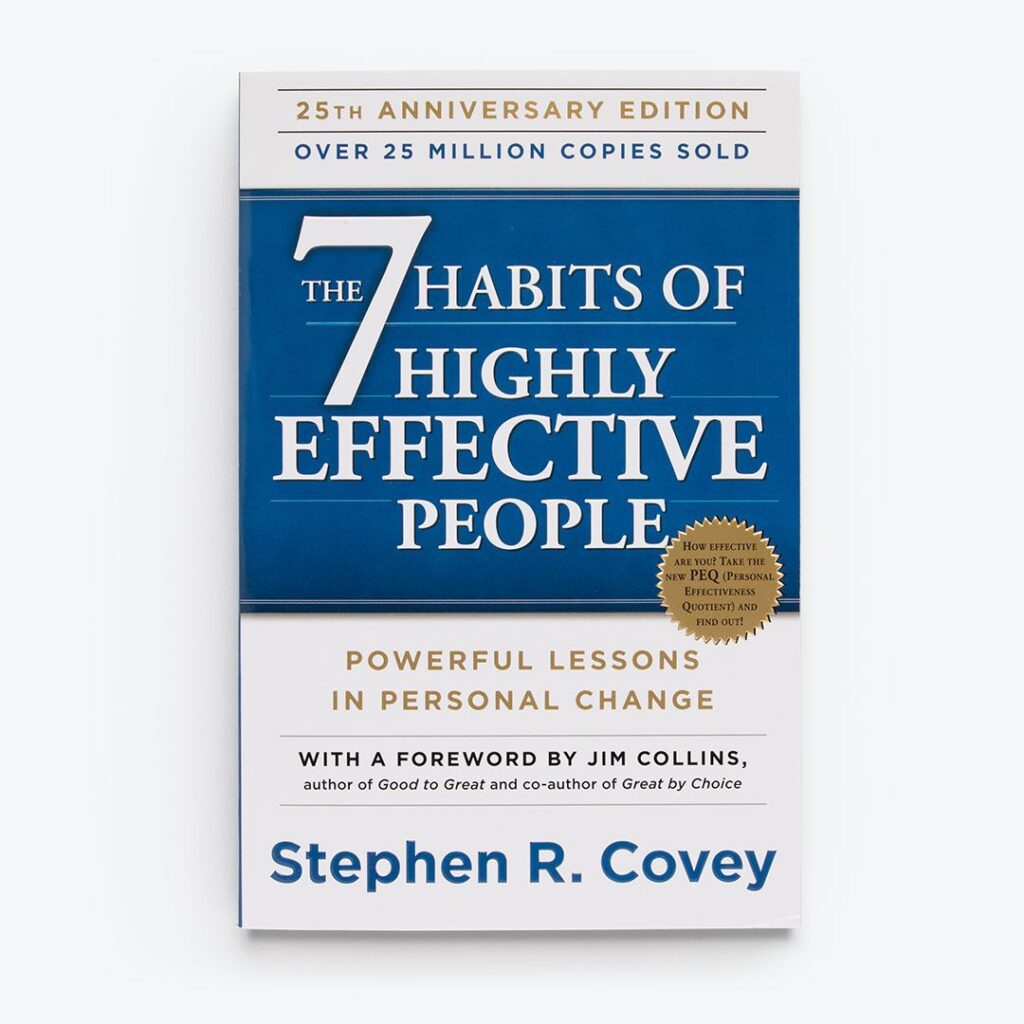
You’ve probably heard of The 7 Habits of Highly Effective People, given that it has been around for decades, yet still feels relevant.
The book takes more of a philosophical approach. Stephen Covey argues that real effectiveness starts on the inside, not with hacks or apps, but with character, values and personal responsibility.
The first three habits focus on mastering yourself:
- Be proactive.
- Begin with the end in mind.
- Put first things first.
You don’t have to react to everything that demands your attention. Instead, define what actually matters. What are you building and who do you want to become? What does success look like for you?
The next habits shift outward toward communication, collaboration and leadership. You need to work well with people, listen and create trust.
What makes this book unique is that it helps you decide what’s worth focusing on in the first place.
4. Outliers
Some people get ahead in life while others stay stuck, no matter how hard they try.
Malcolm Gladwell’s Outliers flips the ‘work harder’ advice and digs into what drives extraordinary achievement.
It’s rarely talent alone, but a culmination of timing, culture, opportunity, and deliberate practice.
He takes a storytelling style, which makes the lessons feel alive. And each story pulls apart the hidden pattern behind productivity and achievement.
In a way, Gladwell reminds us that the secret to getting ahead isn’t always about what you do, but at times, where and when you do it.
5. Getting Things Done
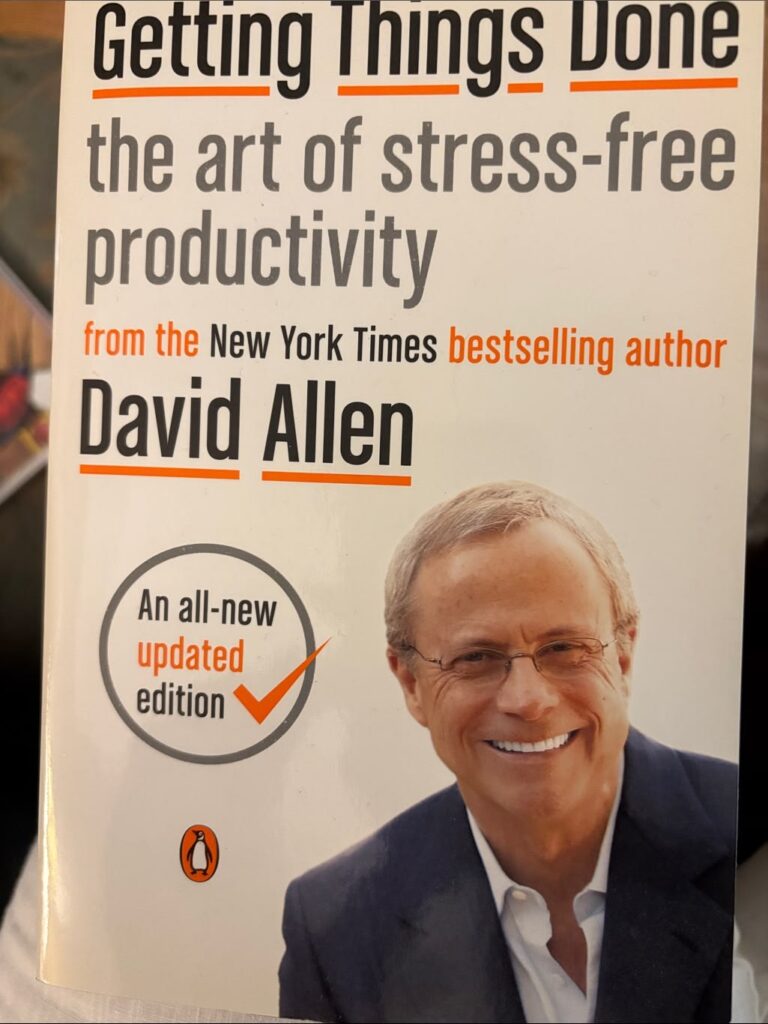
Getting Things Done by David Allen is about turning productivity into a system.
The approach is simple: Get everything out of your head and into a trusted system, and let your mind focus on doing rather than remembering.
Some of the key principles include:
- Capture everything from work emails to random ideas in a trusted place.
- Clarify what each item is and organize where it belongs.
- Reflect regularly, ideally weekly, to keep your mind clear and system accurate.
- Work on what matters most at the right time.
GTD stands out for its flexibility. You don’t need a perfect schedule or fancy app to make it work; just a repeatable workflow that adapts to your life.
6. How to Win Friends and Influence People
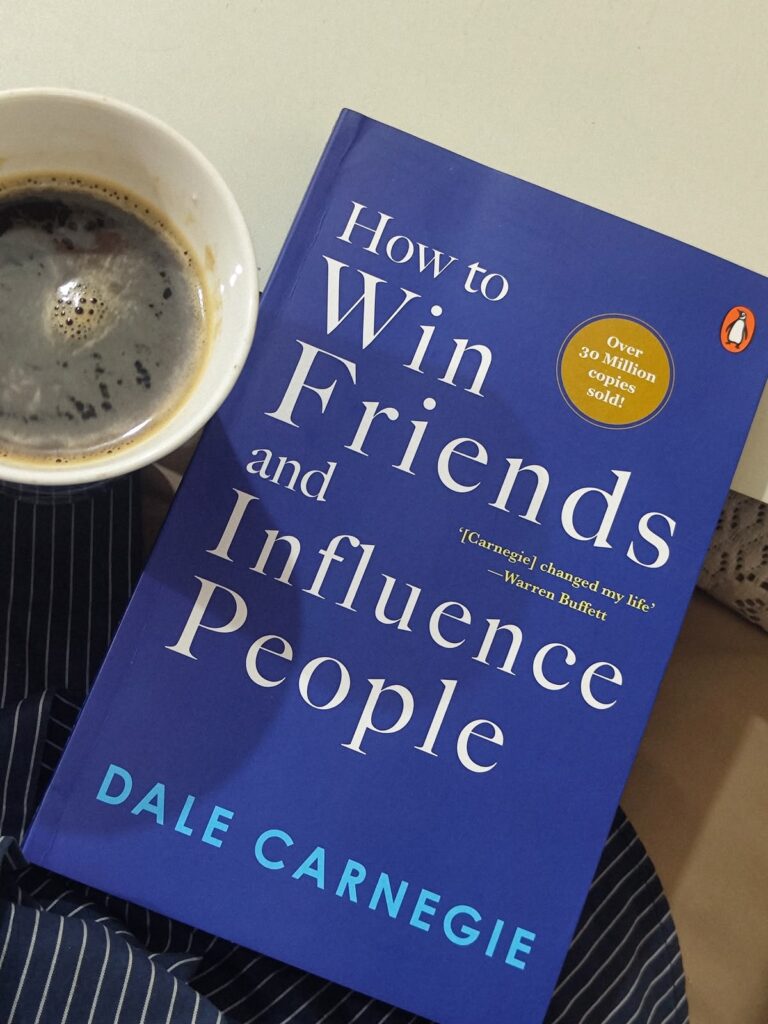
How well you get along with others often determines your success. You can have the best habits and sharpest systems, but if no one wants to work with you, your productivity will likely hit a ceiling.
The classic How to Win Friends and Influence People teaches us that effective relationships are a productivity multiplier. It shows you how to:
- Show genuine interest in people.
- Listen more than you talk.
- Influence without forcing.
- Give honest appreciation.
When you do so, you are likely to have smoother collaborations and doors open in both your personal and professional life.
The networks you build are just as important as what you do in isolation.
7. The Power of Habit
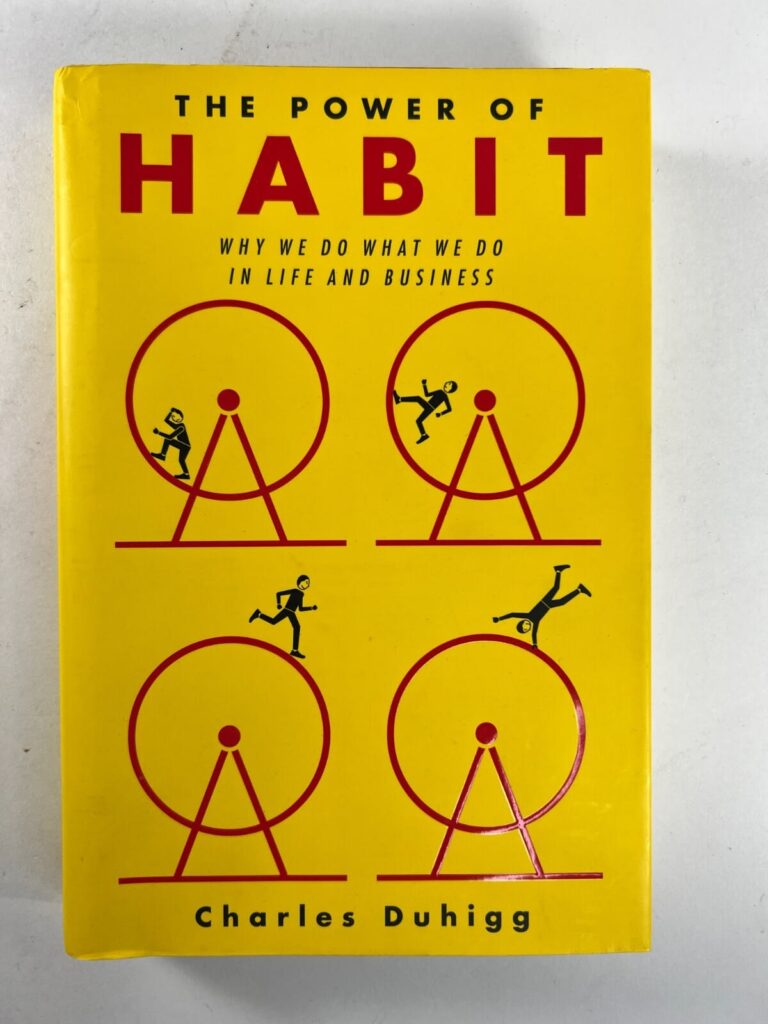
The idea behind The Power of Habit by Charles Duhigg is that habits are sneaky and they run the shows in our lives, whether we notice or not.
The book doesn’t tell you to exercise more or eat healthy. It dives into the science behind the existence of habits and how they shape everything you do.
Like Atomic Habits, Duhigg breaks habits into a loop: cue – routine – reward.
- Identify the cue that triggers a habit.
- Replace the routine but keep the same reward.
- Focus on key habits that influence other areas of life.
Once you read this book, the repetitive and mindless routiness you thought you couldn’t escape from become tools you can wield.
You become in charge of your habits.
8. The Lean Startup
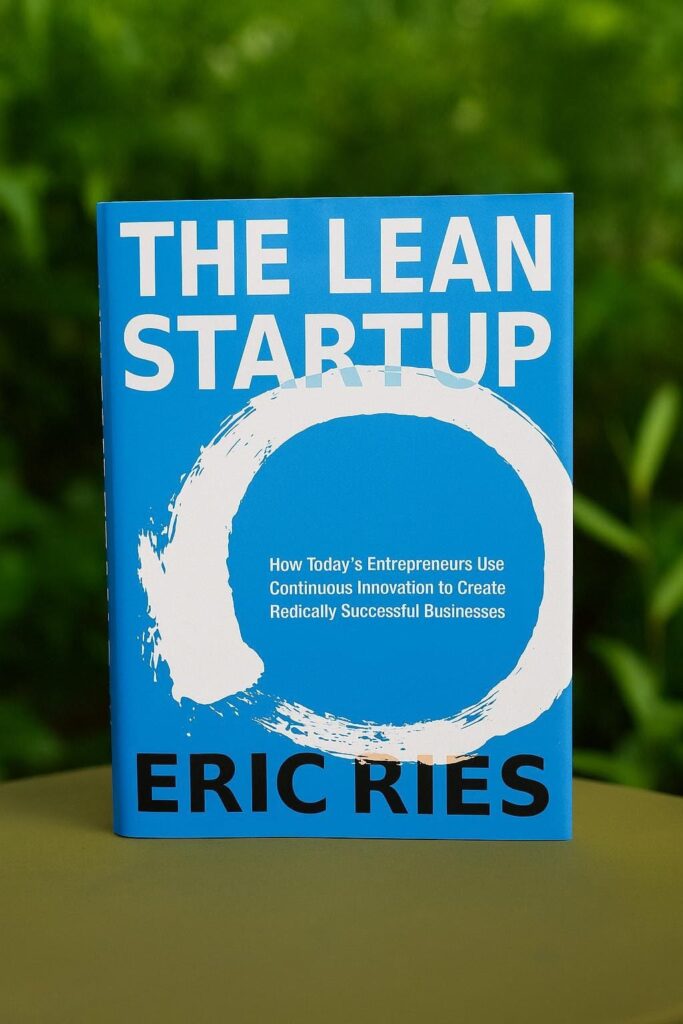
Eric Ries, in his book The Lean Startup, introduces a methodology that has reshaped how startups operate. He emphasizes rapid experimentation, validated learning and iterative progress.
He warns against spending months perfecting a product nobody wants. Instead, build, measure and then learn quickly to save time, energy and frustration.
The book’s core concepts include:
- Build-Measure-Learn Loop: Start small, test assumptions and improve fast.
- Minimum Viable Product (MVP): Launch the simplest version that proves your idea.
- Pivot or Persevere: Use real feedback to decide whether to double down or change direction.
The book tells you to prioritize high-impact work and iterate constantly. The framework is useful for solo projects just as it is for startups.
9. The 80/20 Principle
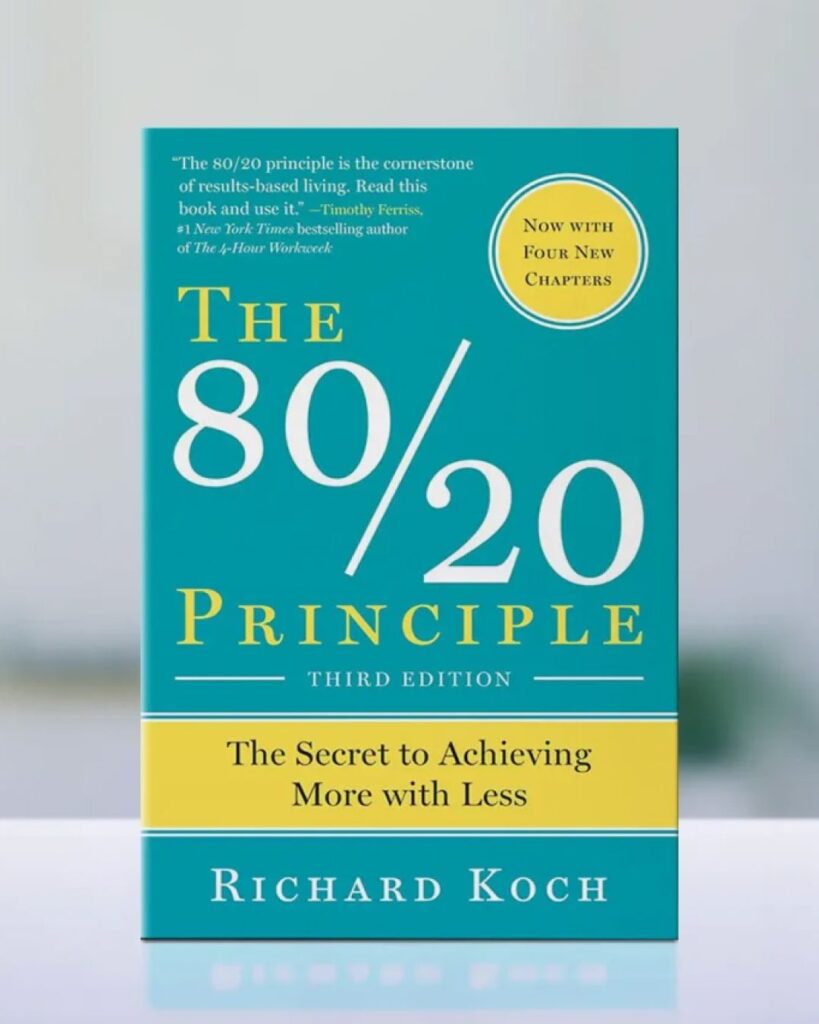
Just because you are busy all the time doesn’t mean you are productive. Koch argues that 80% of your results will come from 20% of your effort. The rest is noise, distractions and low-value work.
That’s the idea behind The 80/20 Principle book. It teaches you to identify the few actions that drive real impact. Once you spot these, you can focus on them and stop grinding on the other 80% that have minimal results.
It is a principle that applies to business, career and personal life.
10. The 4-Hour Workweek
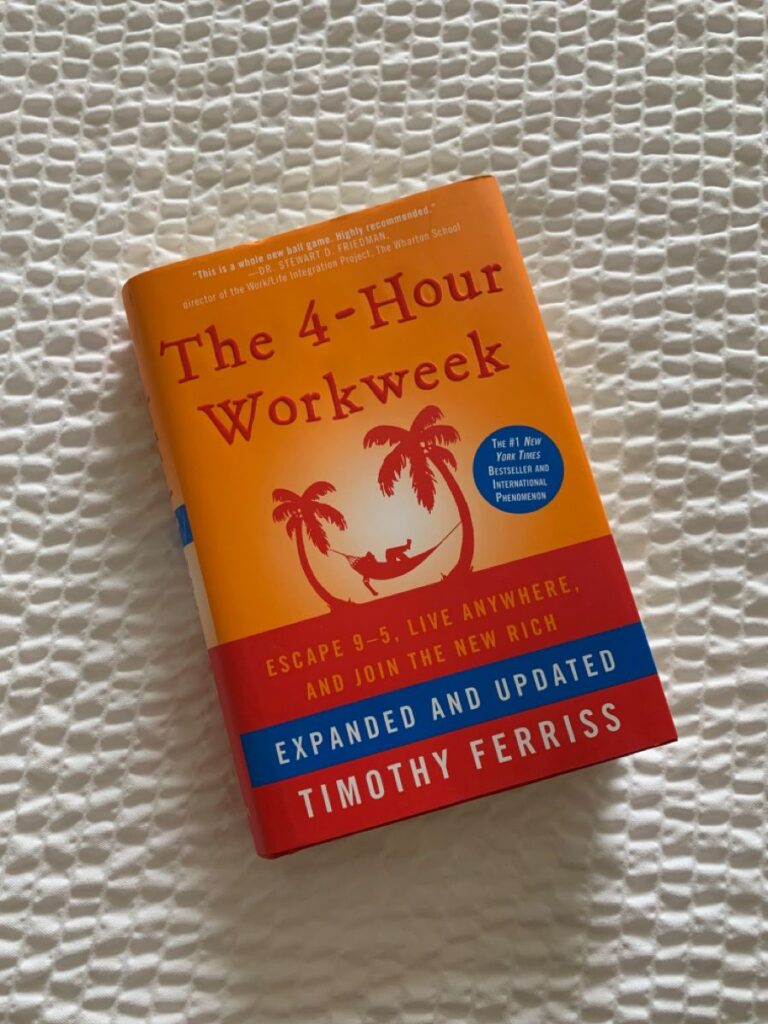
While most productivity books focus on doing more, The 4-Hour Workweek takes a different approach: doing less and living more.
Tim Ferriss challenges the traditional 9 to 5 mindset and instead introduces a principle of automation and outsourcing to free up your time for the things that matter.
He talks about designing your life on your own terms.
- Automate what you can, from work to daily chores.
- Use the 80/20 principle to eliminate unnecessary tasks.
- Liberate yourself from rigid schedules and create more freedom for meaningful work and life experiences.
The 4-Hour Workweek reminds you why you are doing it in the first place. Your freedom is just as important (if not more) as productivity.
The Right Book
Productivity is wide, and no single book covers it all. Each takes a piece of it and expounds through a unique message. Start with these 10 and find the one that resonates the most with you.
Who knows, the right book might be the reset you didn’t know you needed.