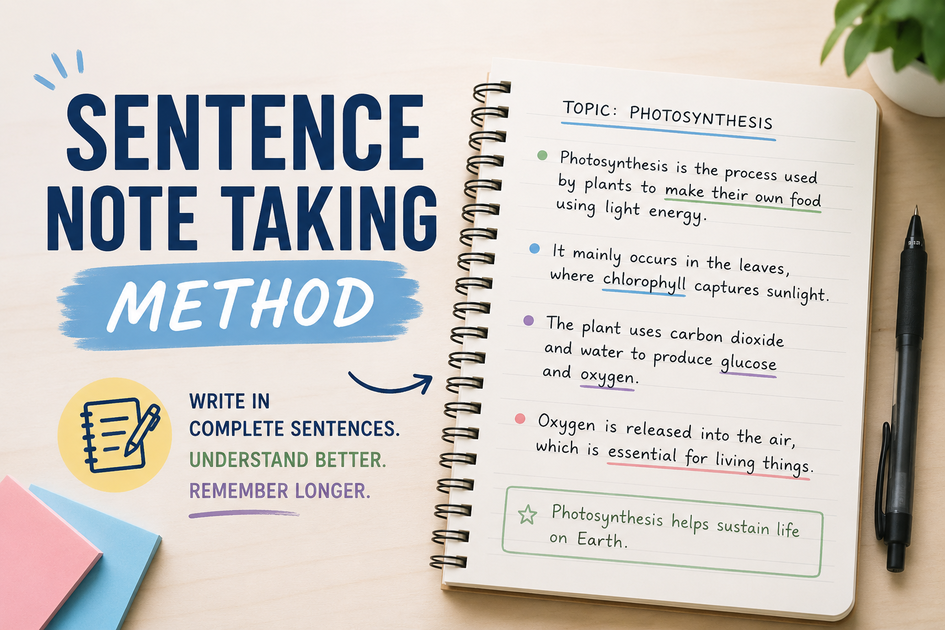
The sentence method is probably how most of us take notes. The teacher says something, you write it down. Maybe circle something important. Add a date, and move on.
It’s a simple note-taking technique, with no fancy structure or diagram. Just sentences stacked under each other, trying to keep up with information before it disappears.
Here’s how it works and how you can use it to make the most of your notes.
What Is the Sentence Method of Note Taking?
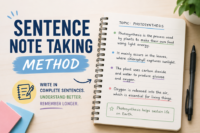
The Sentence Method of note taking is one of the simplest ways to record information. Think back to school, where the teacher would talk while you were busy noting down. That’s essentially the Sentence Method.
There are no diagrams or detailed outlines. You record each new idea as a separate sentence in the order you receive it.
The focus is less about making your notes look neat and more about capturing information before it disappears. The rule is: capture first, organize later.
The Sentence method is for situations where information moves quickly and stopping to organize your thoughts means falling behind.
The technique tends to work especially well in situations where information arrives fast and there isn’t much time to stop, think, and organize. It suits:
- Students in fast-paced classes.
- Professionals attending meetings.
- Journalists taking interviews.
- Researchers.
- Beginners learning note-taking skills.
- People who struggle with keeping up.
How the Sentence Method Works (Step-by-Step)
One reason why the Sentence method has lasted so long is because of its simplicity. The process is straightforward: listen, write, and keep going.
Here’s how it works step by step.
Step 1: Start With the Main Topic or Date
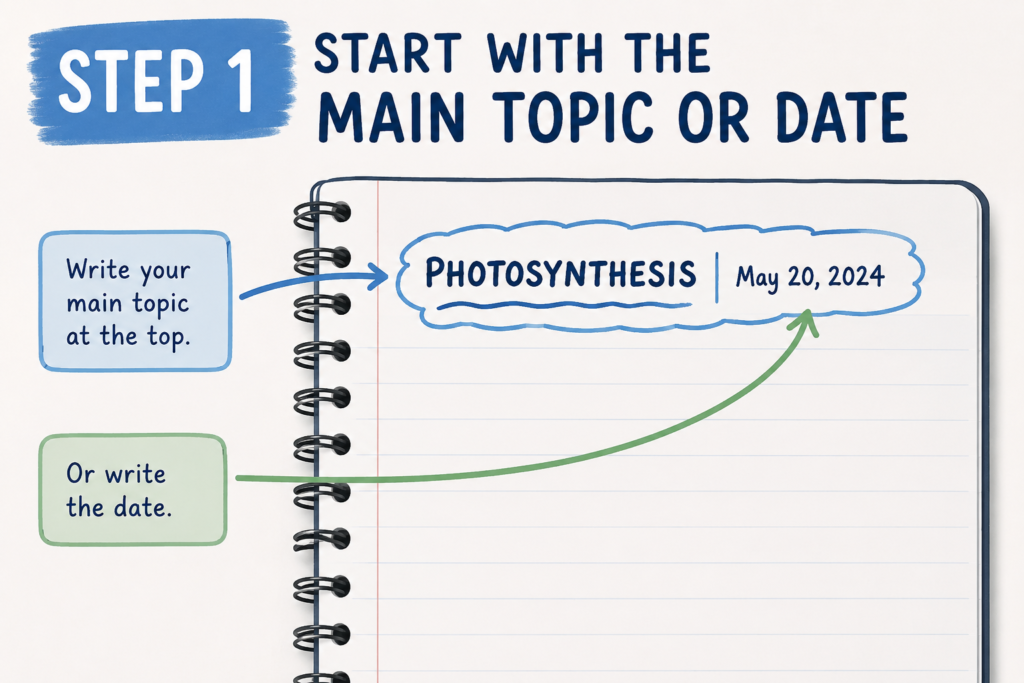
The first step, before writing any individual points, is to begin with the main topic, subject, or date. It sounds like a small step, but it saves a surprising amount of confusion later.
Two weeks from now you’ll open your notebook and find a page full of useful information. But useful for what exactly? Without context, notes lose value quickly.
A title or a date gives your notes a reference point. It tells you where the information came from and makes reviewing much easier.
It doesn’t need to be elaborate. A simple heading at the top of the page is enough e.g. Team Meeting – Weekly Marketing Update.
Step 2: Record Each New Idea as a Separate Sentence
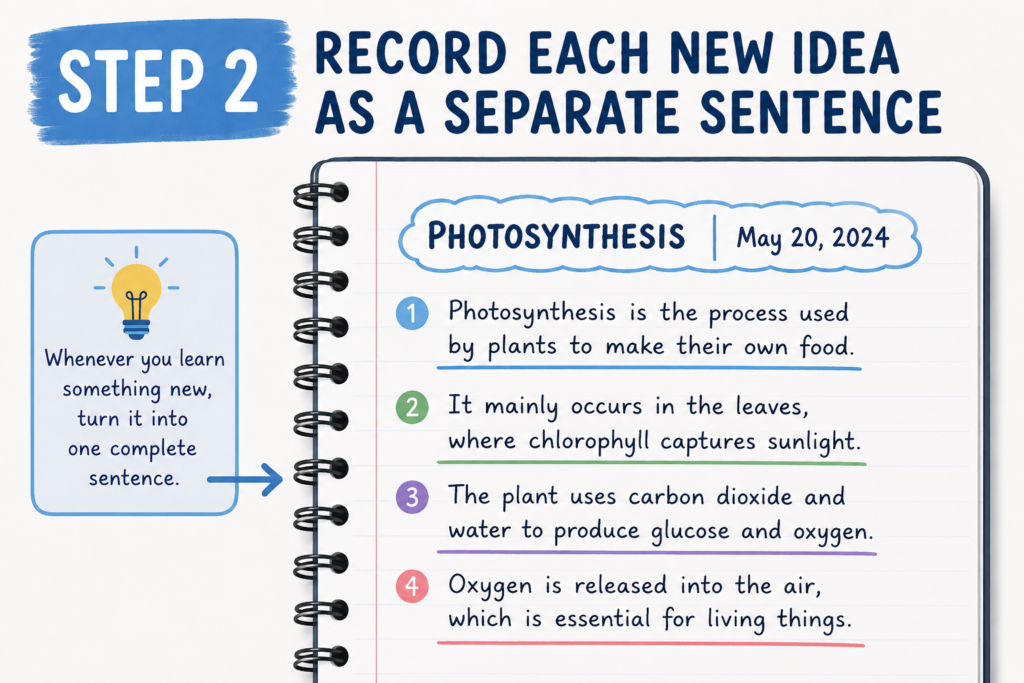
Once you’ve written the topic, you can now start recording information one point at a time.
Every idea becomes its own sentence or numbered entry. Don’t squeeze everything into one long paragraph. Instead, break ideas so they are easier to read later.
Numbering your points will also help keep things organized.
Step 3: Keep Writing Without Overthinking Structure
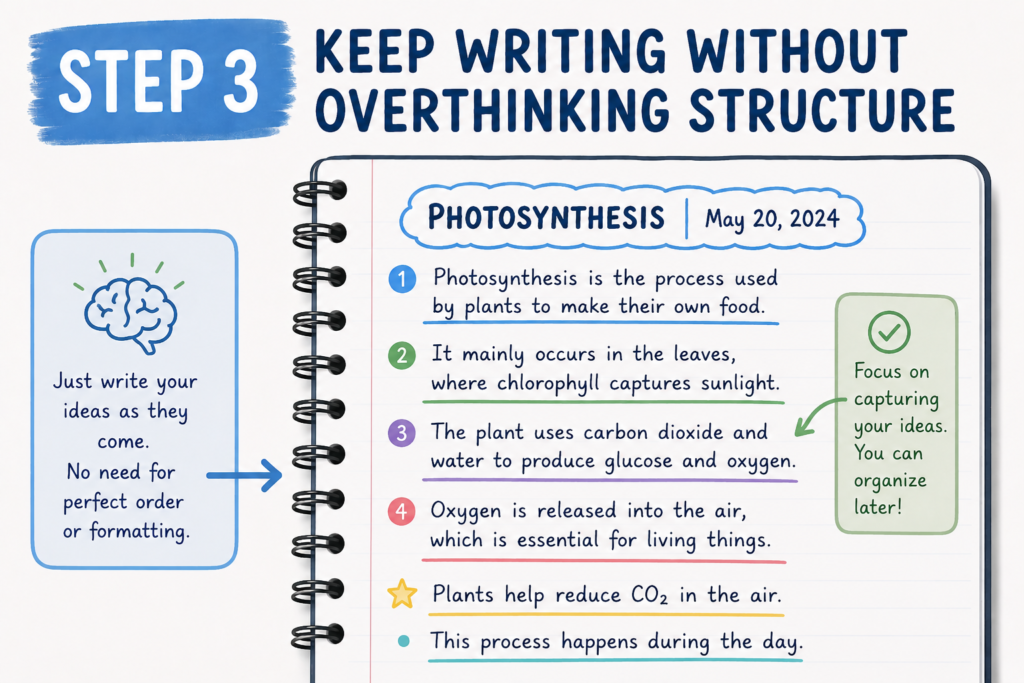
The Sentence method doesn’t allow you to stop midway and ask yourself questions like:
- Would a diagram explain this better?
- Does this connect to a previous point?
- Should this go under another heading?
Such questions slow you down. And with the Sentence method, speed matters more than structure.
The goal is to keep pace with information, especially when the speaker moves quickly from one idea to another.
Sure, your notes may end up looking slightly messy, and that’s fine. Capture first, organize later.
Step 4: Review and Organize Later
The technique doesn’t end with the meeting or lecture. If anything, one of the most important steps happens afterward: reviewing your notes.
During your review, take time to:
- Highlight important ideas.
- Add headings and categories.
- Turn sentences into summaries.
- Rewrite confusing sections.
- Group related ideas together.
- Underline deadlines and key facts.
Reviewing also strengthens your memory. Information sticks better when you revisit it later.
Advantages of the Sentence Method of Note Taking
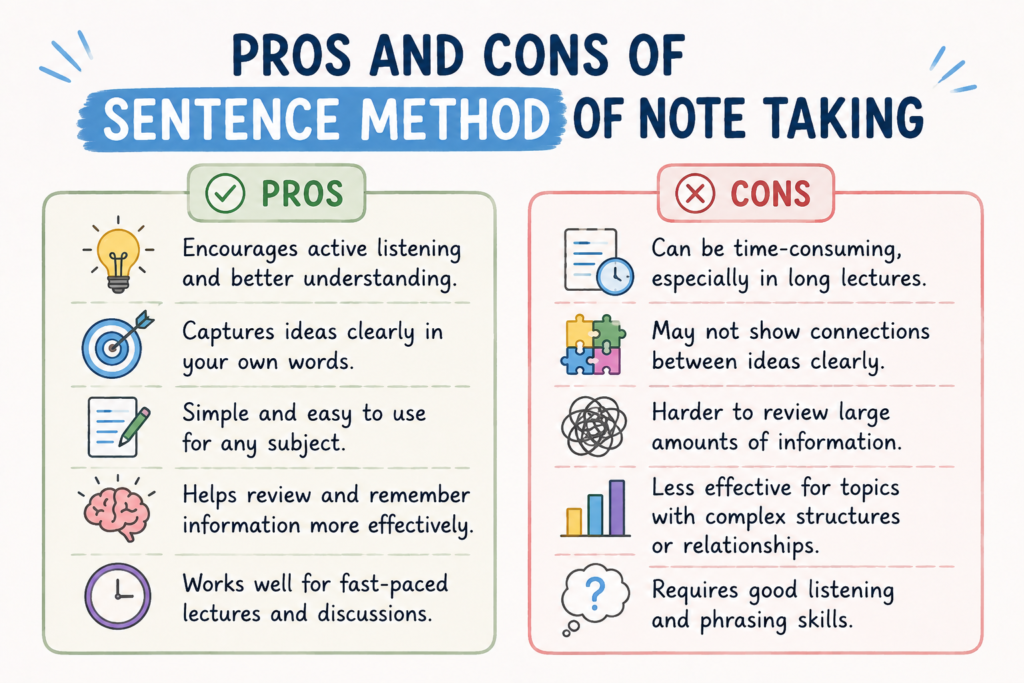
While it’s not the most structured note-taking system the Sentence method offers a few advantages for those who use it.
1. Extremely Easy to Use
Most note-taking methods come with rules. You need sections, categories, and specific layouts before you begin writing.
The Sentence method is different. It has very little setup and almost no learning curve. You can begin with nothing more than a blank page and a topic heading.
You simply listen, write, and continue.
2. Fast and Efficient
Another strength with this technique is its speed.
Since you are writing without stopping to format or organize, it’s easy to keep up when information is coming in quickly.
Less time to organize often means more time to listen. This is useful for fast lectures, interviews and meetings with multiple speakers.
3. Reduces Pressure for Perfect Notes
It’s easy to spend more time trying to make notes look good than making sure you understand what’s being said.
There’s nothing wrong with organized notes, but chasing perfection can easily slow you down.
The Sentence method takes away much of that pressure. Because the goal isn’t to create something impressive on the first attempt but rather to capture useful information.
4. Captures More Information
Given that you’re spending less time formatting, you’re likely to record more details overall.
Every second spent drawing sections and tables is a second you’re not listening. The Sentence method prioritizes recording ideas while they are fresh. Not every point will end up being important, but having too much information is easier to fix than having too little.
5. Useful for Beginners
Complex systems can feel overwhelming for those new to note-taking. Cornell notes, for instance, work well for many people, but require time to learn and practice.
The Sentence method is easier to start with because the process feels familiar.
This makes it a practical starting point for students and younger learners.
Also Read: Charting Method of Note-taking
Disadvantages of the Sentence Method
Even with all its strengths, the Sentence method isn’t perfect. The same qualities that make it useful can also create problems later.
1. Notes Can Become Messy
While speed is one of the Sentence method’s biggest strengths, it’s also one of its weaknesses.
Since you’re writing quickly and in sequence, notes often end up looking crowded and difficult to follow.
Everything is recorded, which is good. But it’s also easy for unrelated ideas to become mixed together. When reviewing later, you’ll require extra time figuring things out.
2. Harder to Identify Main Ideas
With so little formatting, it’s easy for important information to blend in with everything else. A key concept could appear next to a side comment from the lecturer.
All the information is there, but finding the most important points later may take extra effort.
With more structured note-taking methods, major ideas often stand out automatically through headings or sections.
3. Reviewing Takes More Time
The Sentence method may save you time while taking notes, but you spend more of that time later during review.
You save time in the moment by writing quickly, then spend time afterward making the notes easier to understand.
This may not be a major issue if you review material regularly. But the extra cleanup can feel inconvenient if you prefer notes that are already organized from the start.
Tips to Make the Sentence Method More Effective
Consider these tips to make the Sentence method even more simple and easier to understand.
- Number each new point instead of writing everything in one continuous block. This separates ideas and makes it easier to refer back to specific information during revision.
- Use symbols, abbreviations and shortcuts to keep up with fast information.
- Leave small spaces between topics whenever discussion changes direction. It makes the notes feel less crowded and helps you quickly spot where one idea ends and another begins.
- Highlight or mark important information like deadlines and instructions after writing down. It helps them stand out.
- Keep your sentences short and direct. Long sentences take more time to write and can make reviewing harder.
Content Over Structure
The Sentence method won’t give you the neatest notes in the room. Your pages may end up filled with scattered ideas and reminders. But capturing information while it’s fresh can be more valuable than beautiful structures with half missing information.
Sure, the method has its limitations, but with practice and small adjustments, it becomes far more effective.
Ultimately, a good technique isn’t about a sophisticated system, but rather finding a method that helps you capture and remember information.