At times, studying isn’t hard because the content is difficult. It’s hard because we were never told how to actually study.
We treat it like punishment, where we sit still, highlight half the page, and hope something sticks.
Consider these proven and practical techniques that make studying easier and a lot less stressful.
1. Active Recall
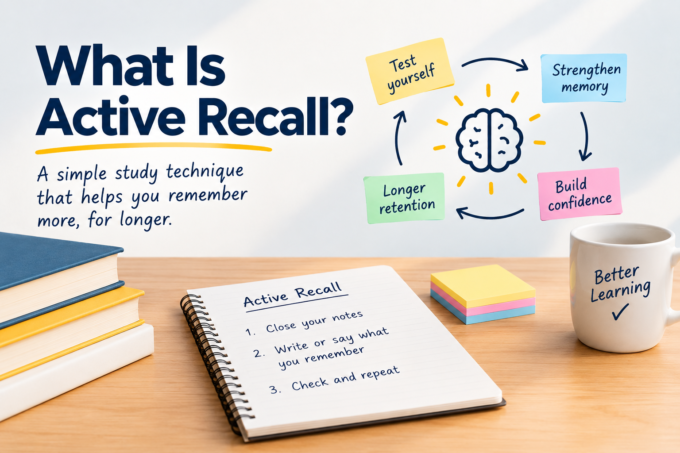
Active recall is where, instead of reading information again and again, you train your brain to pull it out from memory.
You learn a topic, close your notes and then ask yourself questions like:
- Can I teach this to someone else?
- What were the main points?
You then go ahead and write everything you remember on a blank page. Feel free to talk to the wall, we won’t judge.
It’s okay if you struggle to remember. Use this as a cue to review, not a sign that you are bad at the subject.
It will be difficult at first, but that’s how you know it works.
How It Works
- Study a topic.
- Close your notebook and try listing everything you remember.
- Use flashcards as a memory jogger. Only flip them after answering.
- Try explaining the topic to someone else in simple words.
Active recall is effective because it exposes what you know and what you don’t. It then gives you the time to fix it. The technique trains your brain to retrieve information from memory.
2. SQ3R Method
SQ3R stands for Survey, Question, Read, Recite, Review (3 Rs). It’s for when textbooks become painfully dense.
These are the five steps that help you engage with any text.
Survey
Start by skimming the entire chapter even before you read a single paragraph. Go through the headings, sub-headings, summaries and diagrams.
You give yourself a roadmap of what to expect instead of consuming information blindly.
Question
Turn headings into questions to make your brain read with purpose. Make it search for answers.
A heading like ‘How to Study Effectively’ becomes ‘How Do You Study Effectively?’
Read
It’s now time to study. Read actively rather than word-for-word.
Don’t highlight everything. Instead, focus on answering the questions you created. If it doesn’t answer the question, it’s not worth focusing on.
Recite
Close your notebook and try explaining what you just read in your own words. Pretty much like the Active Recall technique.
If you hit a bump, use it as a cue to go back.
Review
Do a quick recap once you’ve finished the chapter. Revisit the summaries and key points to lock it in.
3. Spaced Repetition
Cramming can feel productive, but your brain forgets all of it just as fast. Spaced repetition takes an opposite approach and is far more effective for long-term retention.
How It Works
The method works by spreading your study sessions out over time instead of one long session. You give yourself time, maybe three days or even a month, then revisit the same material.
Every time you go back to it, your brain sees it as familiar information, ‘Oh wait, I’ve seen this before.’
By reviewing it, you strengthen your memory far better than cramming everything in one night.
Consider flashcard apps like Quizlet to help you study. They resurface questions when you’re about to forget.
4. PQ4R Method
The PQ4R method is for when you complete a chapter and realize you absorbed almost nothing.
The acronym stands for:
- P– Preview
- Q– Question
- R– Read
- R– Reflect
- R– Recite
- R– Review
How It Works
Preview
Begin by skimming the chapter. Look at the headings, images, and summaries. You’re not learning yet, you’re first building a mental map.
Question
Like the SQ3R method, the next step is to turn headings into questions:
What are the different study techniques?
How does it work, and why is it effective?
This way, your brain gets something to look for.
Read
Now the active reading begins. Read while searching for answers to your questions.
Reflect
While reading, pause and think about how what you are reading connects to what you already know. Try to also understand why it matters.
Recite
When done, close your book and explain what you’ve learned in your own words. You could write it on a piece of paper, or say it aloud. The purpose of this step is to expose any gaps and fill them quickly.
Review
Come back later, maybe after a few days, and do a quick recap to lock it in.
5. Feynman Technique
The Feynman Technique is based on the simple idea that if you can’t explain something in simple terms, then you don’t understand it.
How It Works
It is a straightforward technique:
- Choose a topic you wish to learn.
- Try to explain it as if you’re talking to a friend or teaching a child using plain language. You know you’ve hit a weak spot when you stumble or get stuck.
- Go back to your notes, study and fill the gap.
A clue that you don’t understand a concept well is when you begin using complex terms without being able to define them.
The technique forces you to deeply understand a concept, and not just surface-level memorization.
6. Mind Mapping
Mind mapping shines when ideas don’t make sense immediately. It gives your brain room to breathe and converts long walls of blurry text into visually flexible ideas.
How It Works
With mind mapping, you start with one main idea at the center of the page, then branch out into related sub-topics, connections and examples. Like a tree, each branch splits again and again.
The technique is different because it uses short phrases and symbols instead of full sentences. It may not be very neat, but it’s clear.
Mind mapping will work well after reading during revision. You’re not learning something from scratch but rather organizing what you already know.
7. Pomodoro Technique
Most of the time, our focus disappears when we decide to check our phones ‘for just a second.’ The Pomodoro technique understands and fixes this.
How It Works
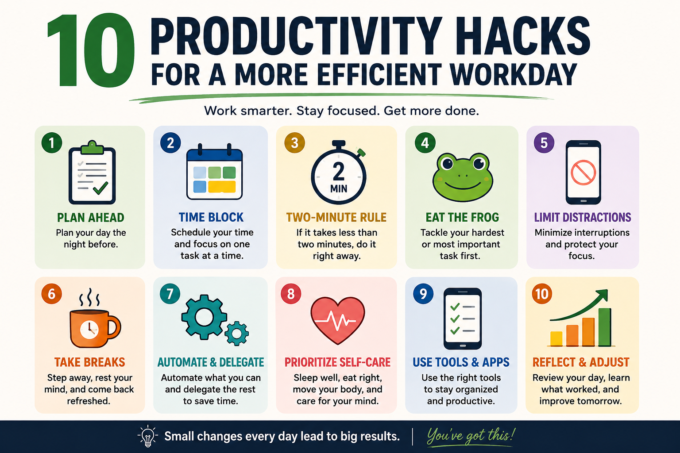
The Pomodoro technique works by studying in short, focused bursts (usually 25 minutes), followed by a short (5 minutes) break. After four rounds, you take a longer break, usually 15 to 30 minutes.
In these 25-minute work sessions, you focus on one thing. No multitasking or switching. Just you and the task in front of you.
The technique creates a friendly urgency and builds momentum. Tasks suddenly become doable without feeling drained.
8. The Blurting Method
Blurting is probably the most uncomfortable study technique, but that’s by design. The method works by dumping everything you know onto a page and allowing the gaps to expose themselves.
How It Works
Once you’re done studying a topic, close your notes and books. Open a blank page and note down everything you remember. This is the ‘blurt’ part.
Once you are done, open your notes and compare. Highlight what you forgot or misunderstood. These weak spots should become your next focus areas. The more you repeat the process, the sharper each round becomes.
Blurting is very similar to active recall, as it forces your brain to retrieve information instead of recognizing it.
9. Interleaving (Mixing Subjects)
Studying one subject or topic for hours feels logical, but it can also be misleading.
Interleaving allows you to mix related topics or subjects during a study session.
How It Works
In one session, instead of focusing on algebra for two hours, you may rotate between statistics and geometry. Or alternatively, mix different problem types within the same subject.
It may feel hard at first, but that’s fine. The struggle is the point. You train yourself to switch mentally and build a flexible, exam-ready understanding.
10. Past Papers & Practice Tests
Finally, if exams are your end goal, you’ll likely benefit most from past papers and practice tests. They show you how knowledge is tested rather than simply explained in a textbook.
How It Works
To make the most of past papers, simulate exam conditions. Treat it like the real thing. Time yourself and don’t check answers midway.
Once done, review the ones you got wrong, and study those topics in more depth.
Practice tests combine everything from active recall to time pressure and realistic feedback.
Study Smarter, Not Harder
There is no single study technique that’s perfect for everyone. What works best depends on what you’re learning and how much time you have.
You don’t have to stick to just one method. If anything, many of these techniques work even better when combined.
Remember, studying isn’t about spending more hours with your books. It’s about making those hours count.