You’ve got a long list of to-dos that will determine whether your day is productive or not. But no matter how much coffee you drink, you can’t get everything done.
So, how do you decide what you’ll tackle and what can wait? These productivity techniques might help you out.
1. Start With a Brain Dump
You need to see everything that’s demanding your attention if you want to figure out what to focus on. And to do that, you need to write down everything that’s on your mind: work tasks, personal stuff, reminders, everything.
Just empty your brain. It’s okay if it gets messy; it’s part of the plan. Once everything is on paper, you can take time to make sense of it.
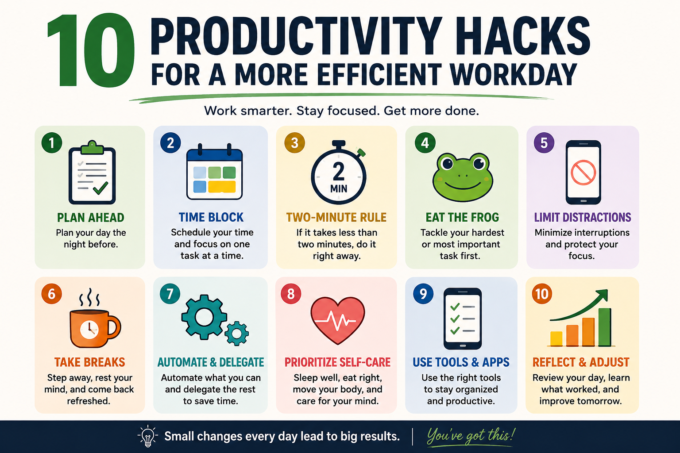
But brain dumping can consume a significant chunk of your time. So, as a productivity hack, I normally recommend planning your next day’s schedule the night before.
This way, when you sit to work, it becomes less about decision-making and more about execution.
2. The Eisenhower Matrix
Now that you have your tasks on paper, it’s time to bring order to the chaos. And the Eisenhower Matrix is perfect for this.
The technique sorts your tasks into four boxes:
Important + Urgent: These are tasks that require your attention immediately and get top priority. You do them now.
Important + Not Urgent: These tasks move your goals forward. They are important in shaping your future, but not necessarily urgent at the moment. So, you can schedule them for later.
Urgent + Not Important: Since these tasks aren’t that important, you can delegate them to someone else. You free up your time for tasks that matter.
Not Urgent + Not Important: These are purely distractions, and you need to let them go, seriously. They add no value to your time whatsoever.
The beauty of the Eisenhower Matrix is how simple it is. Four boxes are all you need to determine what deserves your focus.
3. Eat the Frog
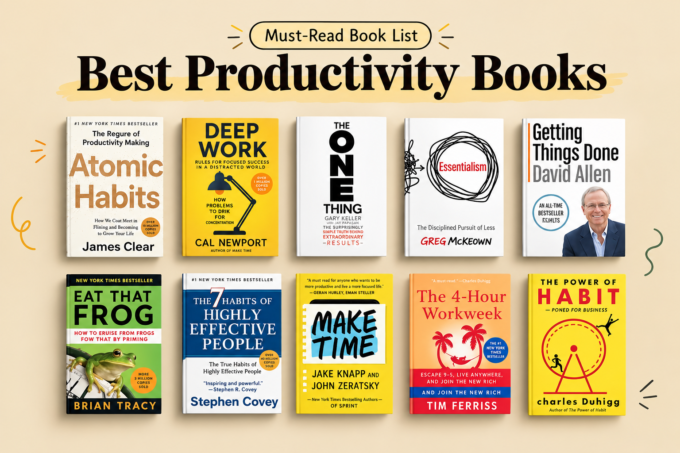
If you had to eat a frog, you’d probably want to do it in the morning and get it over and done with.
Your frog is the hard and uncomfortable, yet important, task that you’ve been putting off. You ignore it because it’s uncomfortable or just plain annoying.
The Eat that frog technique pushes you to handle the most important task first, ideally in the morning. Once you complete it, everything else feels lighter and easier.
It’s an effective way to fight procrastination and build momentum. Like pushing a heavy rock, once it starts moving, it rolls more easily.
4. ABCDE Method

Brian Tracy, who popularized the Eat that Frog technique, also teaches the ABCDE Method.
Like the Eisenhower Matrix, the technique ranks your tasks according to their level of importance:
A– Must Do. These are your top priorities and have serious consequences if left undone.
B– Should Do. They are important but not life-or-death. They can wait till your A tasks are complete.
C– Could Do. These are pleasant but optional tasks.
D– Delegate. Hand off these tasks to someone else to free up your time.
E– Eliminate. These are distractions. You don’t need to do them at all. Cross them off and don’t give them your attention.
Label everything, starting with the A’s and moving down the list. You can then cut off the fluff and focus on what really counts.
5. Use the 80/20 Rule
Not everything you do matters equally. In fact, 20% of your actions yield 80% of your outcomes. That’s the idea behind the 80/20 rule, also known as the Pareto Principle.
Look at your to-do list and ask yourself: Which of these tasks will have the biggest impact when completed?
Perhaps it’s the one that moves your project forward, or one that nets in the most revenue. These are your ‘20% tasks’. The rest are lower-impact tasks that can wait.
The Pareto Principle helps us double down on what matters instead of spreading our energy thin.
6. Time Block Your Day
Time blocking gives you back control of your time. You split your day into blocks of time and dedicate each block to a specific task.
For example, 8 to 10 a.m. can be for deep work, and 11 to 2 p.m. is reserved for meetings. You then focus on the task at hand without multitasking or bouncing around.
Time blocking helps you decide what you should do and when you should do it. It leaves little room for distraction and makes you realistic about how much you can get done in a day.
7. Ivy Lee Method
With the Ivy Lee method, you list six of the most important tasks you need to complete the following day and prioritize them.
Rank them by priority, from the most important to the least important one. When you start working on them, focus on the first and don’t move to the next until you’re done.
It’s okay if you only get three or four tasks done. The unfinished tasks get rolled over to the following day.
This technique forces you to choose the tasks that matter and stick to them.
8. 1–3–5 Rule
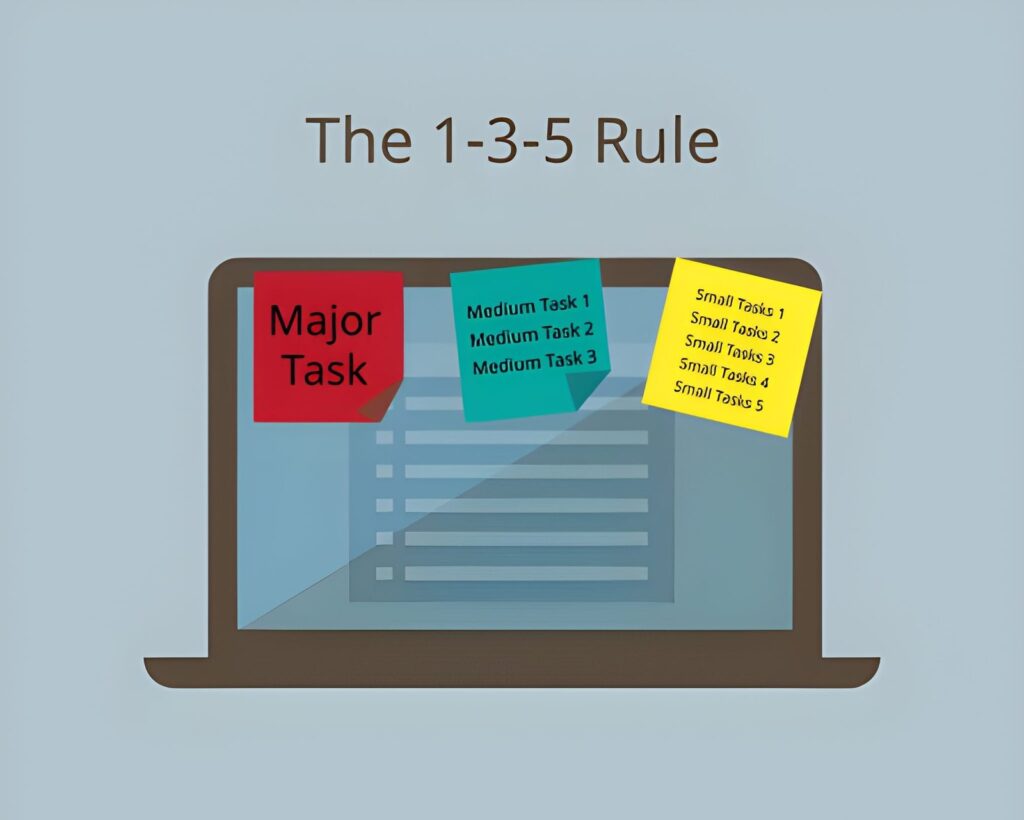
The 1–3–5 Rule is for when your to-do list tends to grow faster than you can handle. Its concept is simple: every day, complete 1 big task, 3 medium tasks, and 5 small tasks. That’s it.
Your big task can be finishing a major report, while a small one could be sending a follow-up email.
The technique helps you fit your most important tasks into the day and balances between high-impact and low-effort wins. It structures your day but makes it flexible.
At the end of the day, you end up with a mix of big progress and small wins without burning out.
9. RICE Scoring Model
The RICE Scoring technique is mostly used in product management, but it can also be applied to daily life.
The framework groups tasks into four categories:
Reach– How many people will the task or product impact?
Impact– How much difference will it make if you do it?
Confidence– How sure are you that it will pay off?
Effort– How much time and energy will it take?
For each task you plan on doing, give it a score for these four factors. Afterward, use the result to decide what task is worth your time. Tasks with the highest final score become the priority.
This approach bases its findings on data rather than gut feeling. It’s thus perfect for when everything feels equally urgent and important.
10. Bubble Sort Method
The Bubble Sort Method is an intuitive way to rank priorities. The technique works by writing down your full list of tasks, then comparing them two at a time.
If you could do only one of the two, which one would it be? Whichever wins moves up the list.
You keep comparing two tasks at a time, and swapping their positions if necessary, until the most important tasks naturally rise to the top, just as bubbles in a glass of soda would.
It’s a simple method, yet surprisingly effective. It forces you to make real-time value judgments instead of pretending everything matters equally.
Review and Adjust
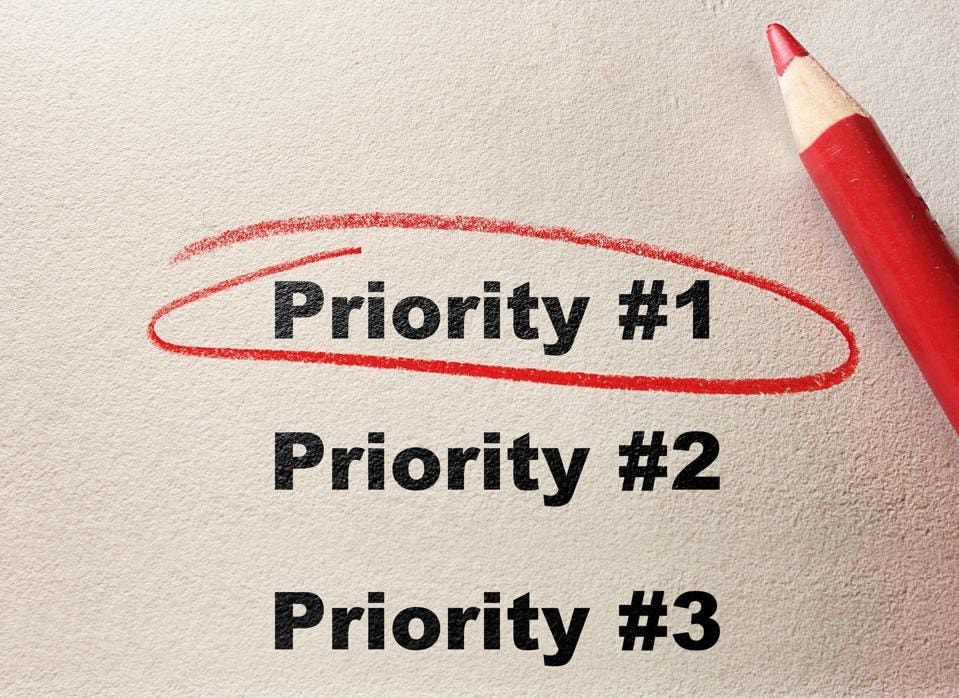
We have limited time, and we ought to use this to focus on the tasks that matter most. Do what you must, and everything else can wait for later.
The techniques above give you different ways to approach your day. You don’t need to use all of them. The best system is often a simple combination that works for your routine.
The next time your to-do list feels overwhelming, don’t try to tackle everything at once. Step back, prioritize, and start with the task that matters most.