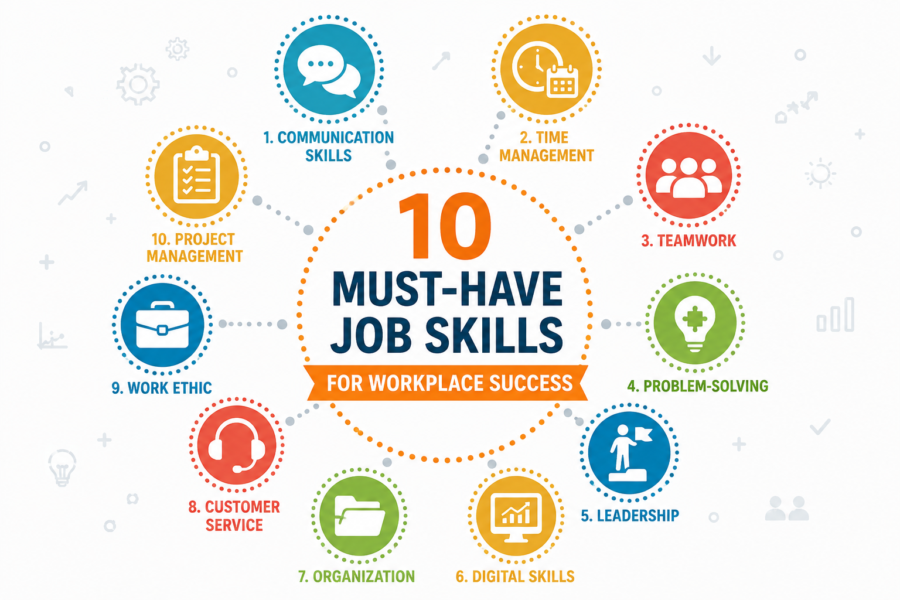
Unfortunately, your job description doesn’t come with a guide for all the little things you’re expected to know.
How do you deal with a difficult coworker? What do you do when multiple deadlines land on the same day?
Luckily, many jobs rely on a similar set of basic skills. You can practice and get better at them over time.
Develop these workplace skills and you’ll be in a much better position to do your job well.
1. Communication Skills
No matter how good you are at your job, if no one understands what you’re saying, you’ll have a hard time proving it.
Good communication goes beyond speaking clearly. It includes replying to emails, giving updates on projects and listening carefully. It’s about how you get your point across without creating unnecessary confusion.
Here are a few pointers to keep in mind:
- Listen before responding. Don’t just wait for your turn to speak.
- Ask questions whenever something is unclear.
- Keep people informed, especially when something affects their work or a deadline.
Being a good communicator doesn’t mean being the most talkative person in the office. It means knowing when to speak, when to listen, and most importantly, making sure everyone is on the same page.
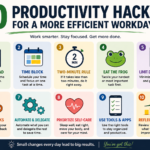
2. Time Management
You can be busy and not productive. Time management is knowing where your time goes and making sure important work gets done.
It is knowing what needs your attention and creating priorities so that smaller tasks don’t take up your entire day.
A few habits will help you manage your time properly:
- Prioritize your tasks, starting with work that matters most.
- Set deadlines to help you stay on track.
- Break large tasks down. A big project feels much easier to tackle when you turn it into smaller steps.
- Limit distractions and give yourself uninterrupted periods to focus on important work.
You don’t have to squeeze every possible minute out of your day. The goal is to finish important work and not feel like you’re behind.
3. Teamwork
Very few jobs are truly a one-person operation. And even if you work alone, at some point, you’ll likely need input from other people.
Not everyone thinks and works the way you do. It’s important that you accommodate different working styles to prevent unnecessary friction.
Good teamwork is also about being reliable. Communicate problems early and let people know you’ll complete your part so they can plan their work around you.
4. Problem-Solving
Problems are part of every job. A deadline may be shortened, a client might change their mind, or midway through a project, you might realize you’re working with the wrong information.
When a problem occurs, you need to be able to look at the situation, figure out what’s causing the issue, and work toward a sensible solution.
You likely won’t get an answer immediately. A better approach is to slow down and avoid making the problem worse with a rushed decision.
Problem-solving techniques make you extremely useful in almost any workplace.
5. Leadership
You don’t need to be a manager to be a leader. Leadership can be as simple as taking responsibility for a project or helping a coworker with a task.
Good leaders speak up but also know when to listen. They don’t control every detail or take credit for everything. Instead, they help those around them perform their jobs well.
A clear sign of good leadership is how you act when things don’t go according to plan. You focus on understanding what happened and fixing the situation rather than blaming it on someone else.
6. Digital Skills
Many jobs today rely on basic technology. You should be comfortable using the everyday tools your job depends on.
That could be Google Workspace, project management software, video conferencing platforms, communication apps, cloud storage, spreadsheets, or industry-specific systems.
Sure, you don’t need to know every new app that comes along. What’s important is that you’re comfortable enough with technology to figure things out when the tools change.
7. Organization
Poor organization creates problems that have nothing to do with your actual ability. You might waste 20 minutes looking for a file or miss a deadline because you forgot about it.
Good organization means knowing what you need to do and where to find the information you need.
A few simple habits can make a huge difference. Organize important files so you can find them quickly and maintain a running list of tasks instead of relying entirely on memory.
Create enough structure so your brain isn’t constantly trying to remember where everything is and what you’re supposed to do next.
8. Customer Service
Customer service isn’t reserved for people who answer support tickets or those working behind a reception desk. If your job involves clients, customers, patients, and suppliers, you are providing some form of service.
Good customer service means knowing how to handle unhappy people. Not every complaint will be reasonable, and you won’t always be able to give someone exactly what they want. But you can still remain professional, explain what you can do, and avoid escalating a frustrating situation into an argument.
Communicate clearly and set clear expectations.
9. Work Ethic
A strong work ethic shows up in the small things. You turn up when you’re expected to, you consistently meet deadlines and you don’t disappear when a task becomes difficult.
It also means doing your best even when no one is watching. You should aim to maintain a reasonable standard of work.
10. Project Management
Whenever you have a task that involves people, resources, and deadlines, that’s project management.
It helps you take a large goal and turn it into manageable pieces. You get to understand what needs to be done, who is responsible for it, when it needs to happen, and what could get in the way.
There are numerous project management tools that will help you with this. But the most important thing is to have a clear picture of the work from beginning to end. This way, it becomes much easier to manage.
Skills That Make Work Easier
You don’t need to master every skill on this list overnight. What matters is the willingness to improve.
You strive to communicate better, to better manage your time and projects and to handle every problem that comes your way.
Being good at your job isn’t just about knowing what to do. It’s also about knowing how to work, how to deal with people, and how to handle whatever gets thrown your way.