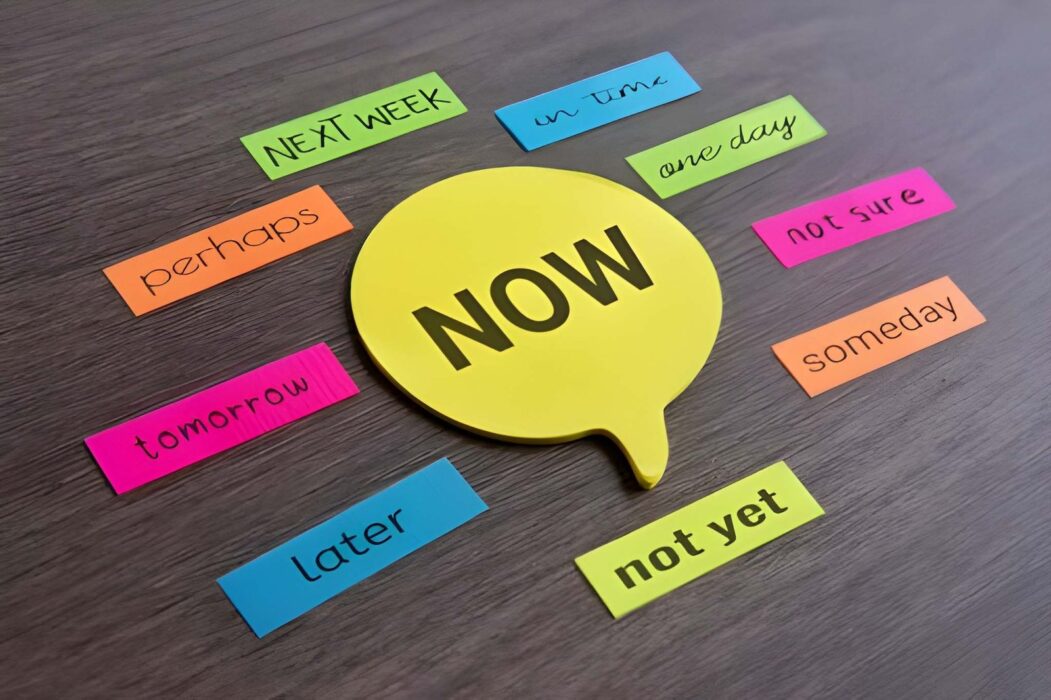
Procrastination isn’t always you flat out refusing to work. Sometimes, it’s you ‘preparing.’
You rearrange your desk, watch one productivity video, make coffee, and check something real quick before you start. Only you never start.
You hide under harmless delay. ‘I’ll do it later when I’m ready.’ But that later keeps moving.
It’s a weird cycle where you know what needs to be done, but starting feels uncomfortable. The task feels overwhelming, boring, and unclear, and your brain naturally reaches for something easier.
If all this sounds familiar, consider our practical tips to overcome procrastination.
These aren’t guilt-based motivation or extreme productivity stunts. Just realistic strategies to help you start and stop pushing important tasks for later.
1. Plan in Advance
Procrastination begins the day before, when you don’t decide what you’re going to do.
The moment you wake up without a plan, your brain instantly goes for the easiest option: check your phone, scroll a little.
Planning in advance removes this morning’s negotiation. When you wake up, you already know what needs to be done, when you’ll do it and what the first step is. You don’t waste energy deciding. You simply begin.
Planning doesn’t need to be detailed. It can be as simple as:
- Writing down your top 3 tasks for tomorrow.
- Assigning a rough time block to each task.
- Preparing your documents and materials.
Procrastination feeds on uncertainty, and planning kills this uncertainty. It’s difficult to drift into distraction when tomorrow already has a structure.
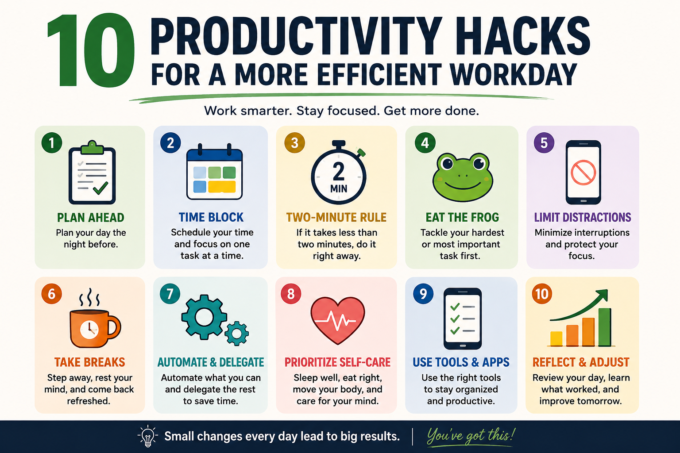
2. Eat the Frog
Your frog is the hardest, most uncomfortable task that you keep avoiding. To eat the frog means tackling this task first, before your brain has time to talk you out of it.
You avoid the easy, low-resistance stuff and go for the bigger task sitting in the background. Doing this does two things:
- It makes the rest of your day feel lighter.
- It helps you build momentum.
Once you tackle it, everything else becomes easier.
So in short, identify the one task you’re most tempted to avoid, commit to doing it first thing in the morning, and don’t move on to another task until it’s done.
3. Prioritize
Procrastination can also be about avoiding the right work. Everything feels important, so your brain freezes. It then defaults to the easiest task with the easiest win– the task that feels productive but doesn’t really move anything forward.
When you prioritize, you decide what deserves your attention; and it’s rarely the loudest and most urgent-looking.
Ask yourself: If I could complete one thing today, one that would make the biggest difference, what would it be?
That is your priority. You can pick one to three priorities and make sure you complete them before the day ends.
4. Shrink the Task
One reason we procrastinate is because we think, ‘This is going to take forever.’
The task at hand feels too big and too heavy. Your brain looks at it and immediately searches for an escape.
So shrink it. Instead of writing an entire proposal, divide it into sections:
- Write the headline.
- Draft the first paragraph.
Make each step small enough that your brain stops resisting. There’s no anxiety in writing the headline and no drama in drafting the first paragraph.
Once you start, the momentum kicks in and you find yourself going on. Aim to begin and not to finish. Because when you shrink the task, you shrink the resistance.
5. Use Time Management Techniques
Time management techniques are the structures that beat the chaos of procrastination.
They give work structure and make it easier to start. You can use different techniques:
- The 2-minute rule: if it takes less than two minutes, do it immediately.
- Focus sprints: Work in short, intense bursts with breaks in between.
- Time blocking: Assigning tasks to fixed slots in your calendar.
Such techniques keep you from drifting. They turn “I should start” into “It’s 08:00 — I’m starting.”
6. Set a Timer

A ticking clock is weirdly powerful. It creates urgency without panic.
Your brain will slow down when a task feels endless. But when you say, ‘I’ll work on this for 30 minutes,’ it suddenly becomes doable. You’re not committing yourself to a whole morning. You are committing to one focused block.
The goal is to make a task manageable. And when the timer rings, you either take a short break or reset it and keep going.
Time limits remove the illusion that work lasts forever and give your effort a clear start and finish.
7. Eliminate Distractions
We are surrounded by distractions, from our phones to open tabs and background noise. With temptation within arm’s reach, you are fighting an uphill battle.
The smarter move would be to reduce the fight. Consider:
- Logging out of social media.
- Putting your phone in another room.
- Closing unnecessary tabs.
- Turning off non-essential notifications.
Instead of testing your discipline, design around your weakness. Eliminate distractions and you won’t have to rely on motivation mid-task.
8. Your Environment
Your environment shapes your behavior more than you realize– a TV in front of you has distraction written all over it, a bed whispers rest while a messy desk signals chaos.
Your home office doesn’t have to be perfect, but it should prepare you for deep work.
- Clear your desk
- Change rooms if needed
- Eliminate distractions
A small shift like moving from the bedroom to the dining room can have a massive impact on your productivity.
Look around and ask yourself, ‘Is my environment working against me?’ If it is, change your space, and you’ll likely change your behavior.
9. Remove Perfectionism
You’ve not started the project because you want it to be great. And you’re delaying hitting publish because you are rewriting it for the fourth time.
Perfectionism feels responsible, but most of the time, it’s just procrastination wearing a suit.
Your blog doesn’t need to impress anyone, it just needs to exist. You cannot edit what is not written, and you can’t improve what doesn’t exist.
Give yourself permission to be messy at the beginning. You can raise your standards later.
Done beats perfect every single time.
10. Track Your Wins
It’s difficult to keep going when it feels like you’re not making progress. Your brain feels defeated even before you begin if all it sees is undone work.
That’s why you need to track every win, however small.
- Check off your list after completing every task.
- Doing laundry and cleaning the house also counts as a win.
- Celebrate a little every time you hit publish on your blog.
Instead of thinking, ‘I’m so behind,’ you start seeing, ‘I’ve accomplished a lot this week.’ There’s a small hit of satisfaction that comes with checking something off.
The more you notice progress, the less intimidating future tasks feel. And the less intimidating they feel, the more likely you’ll complete them.
Don’t Beat Yourself Up
It’s okay to fail. It’s okay to miss work sometimes. It’s life, it happens.
Some days you’ll execute perfectly, while some days you’ll slip. What matters is how quickly you return.
Don’t be too hard on yourself. Guilt drains energy; and when your energy is low, avoidance shoots high.
Forgive yourself, restart, and be consistent. You’ll be surprised by how much you can achieve.