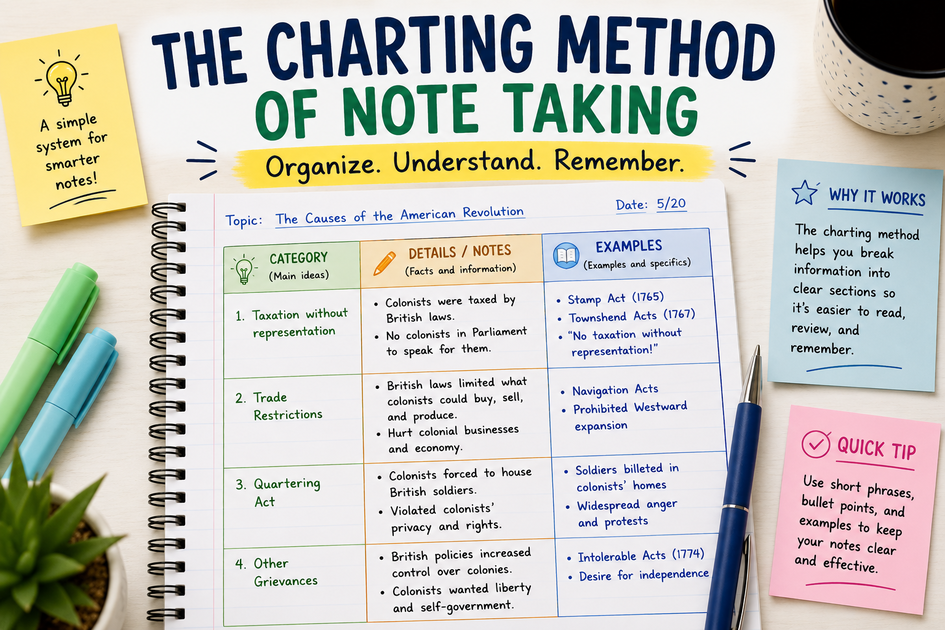
The charting note-taking method is perfect for when you don’t have the best handwriting or a calm and distraction-free brain.
It doesn’t require long paragraphs of notes and makes it easier to organize information for future review. It turns chaos into something you can revise from without panicking the night before an exam.
Here’s all you need to know.
What Is the Charting Method of Note Taking?
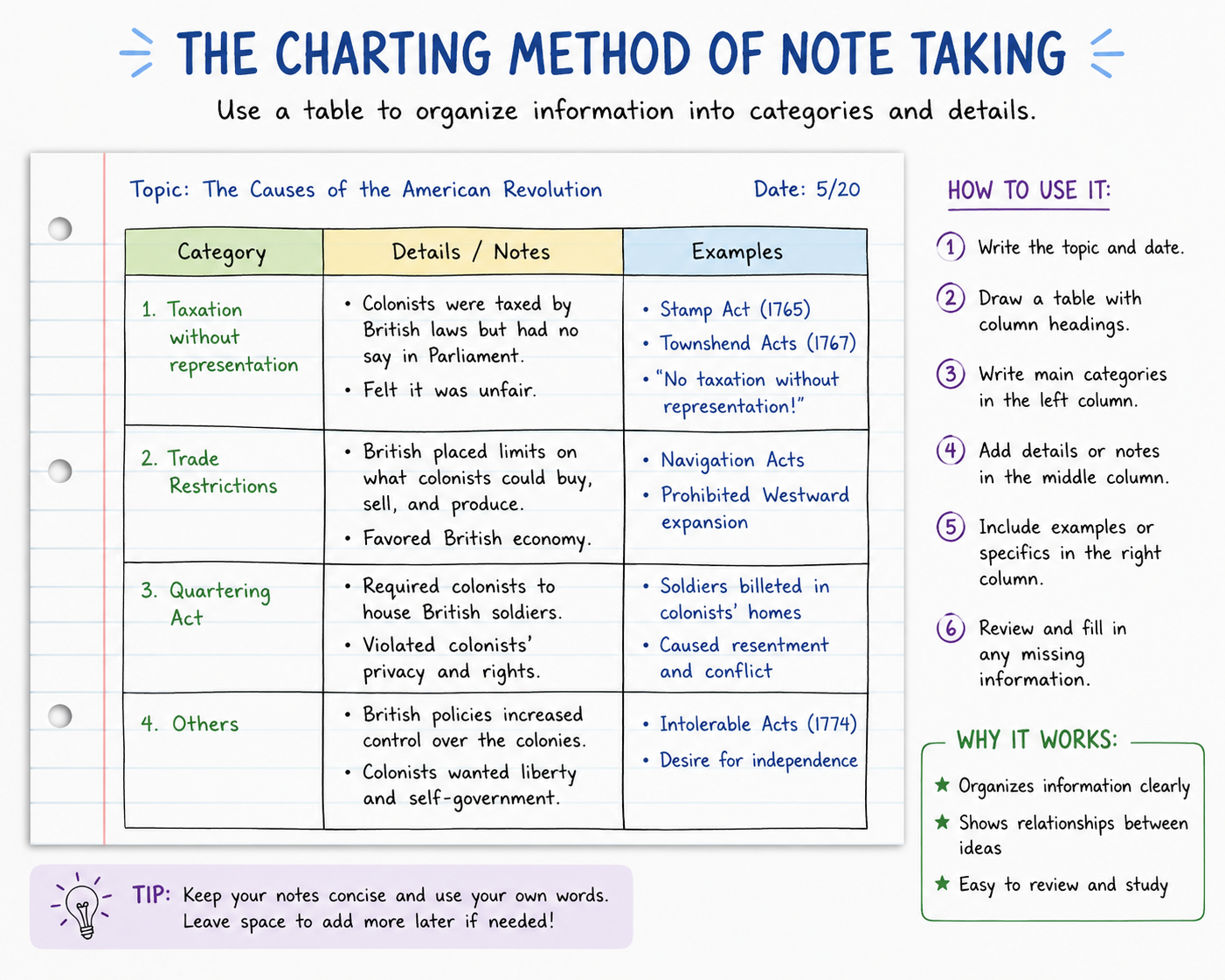
The charting method lets you organize your notes into columns (kind of like a table), with each column representing a specific idea or category.
Unlike methods that rely on continuous notes or outlines, the charting method organizes information into clearly defined categories from the start.
You divide your page ahead of time. Each topic gets its own space with different columns for definitions and examples.
You sort information as you write, which reduces the amount of reorganizing you need to do when reviewing later.
Also Read: Sentence Method of Note-taking
How the Charting Method Works
When done right, each step of the charting method builds on the last; and your notes end up being structured and revision-ready.
Here’s a step-by-step on how the method works, from a blank page to notes that make sense later.
Step 1: Identify the Main Topic
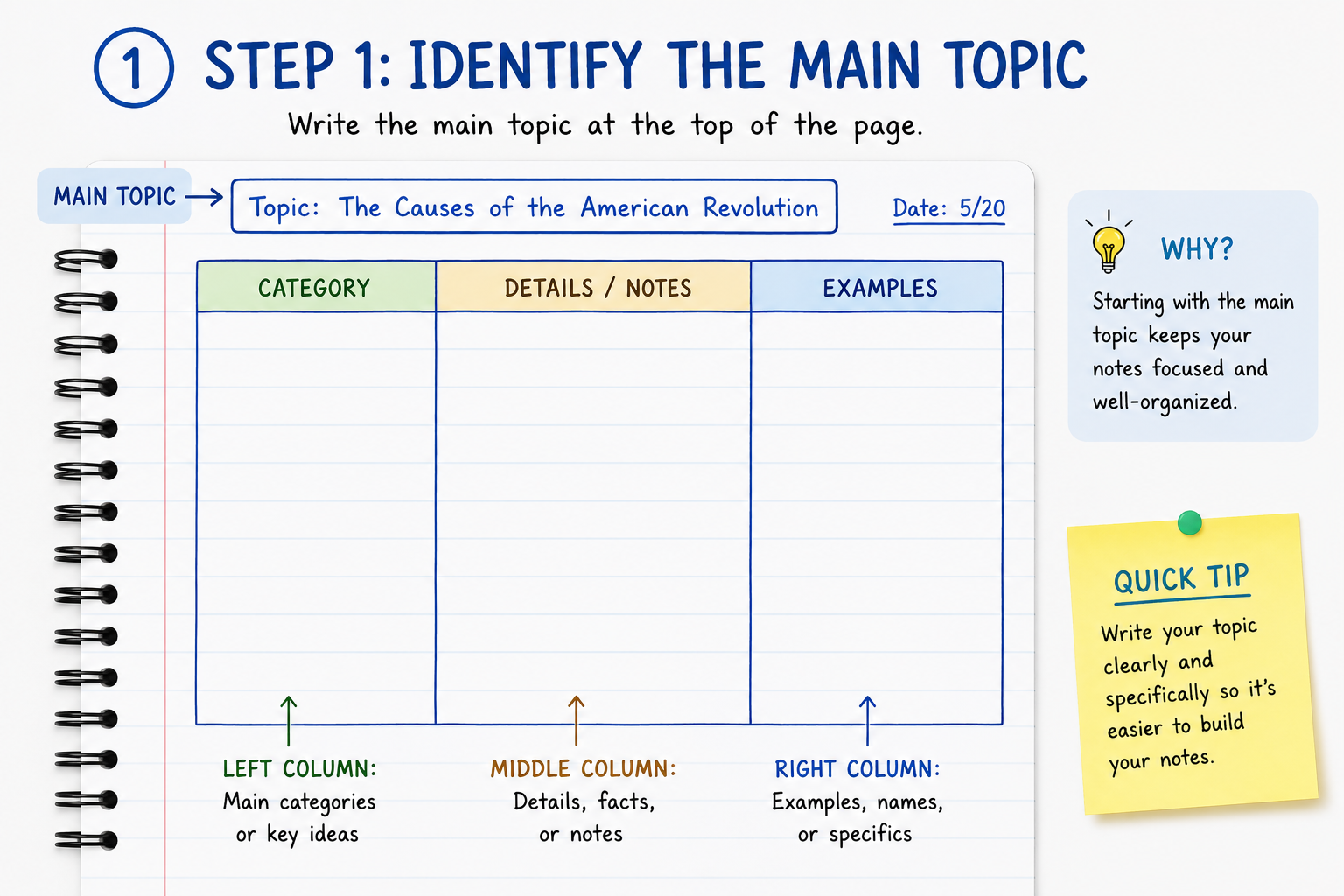
Before writing anything, take a moment to identify the main lesson, chapter, or what the discussion is about.
It’s really important you get this right since you want to group information meaningfully.
Step 2: Divide Your Page Into Columns
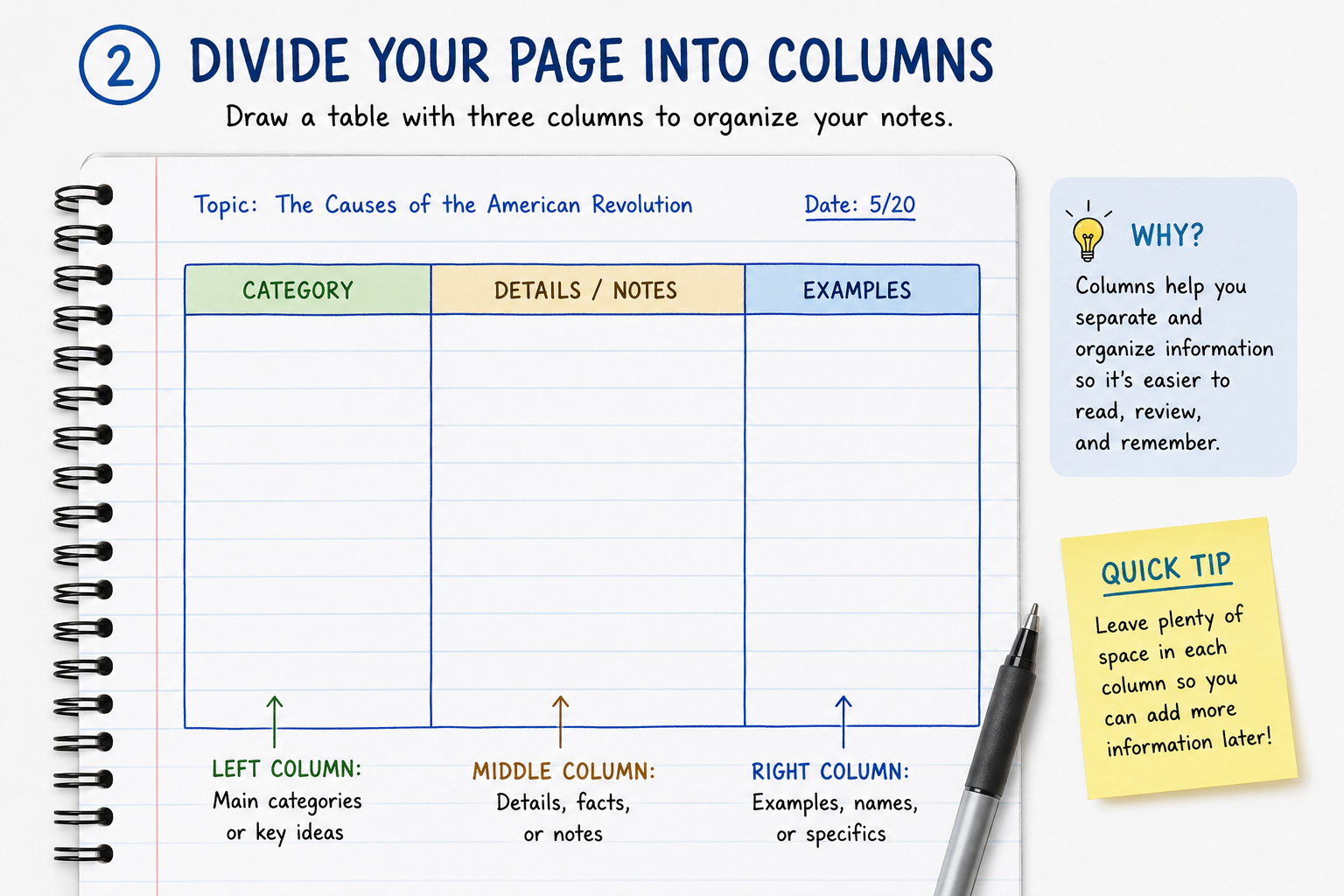
The next step is to split your page vertically into columns. You can do this by either drawing lines on paper or use a table if you’re writing digitally.
Each column represents a different category of information. For example, definition, key features, advantages and disadvantages and causes and effects.
While the number of columns depends on the subject, three to five is usually the sweet spot. Too few columns and everything gets cramped, too many and you risk slowing yourself down.
A clean layout saves you a lot of confusion later.
Step 3: Label the Columns
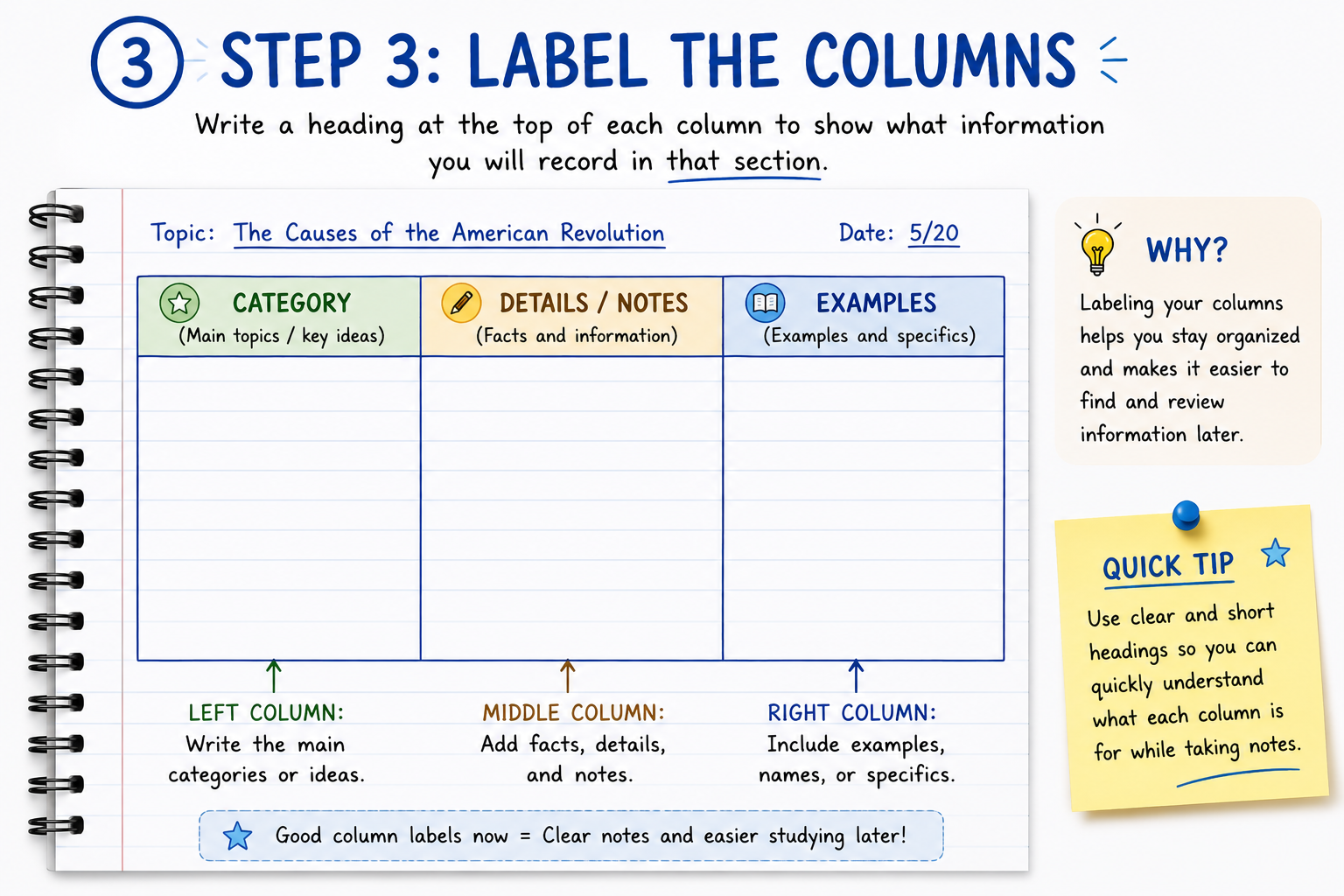
Write a short and clear heading at the top of each column indicating what belongs there. The goal is to have the future-you understand it at a glance.
Don’t use vague labels like ‘Info.’ Instead, be specific: ‘Key Characteristics, Functions, Pros and Cons.’
Step 4: Add Information
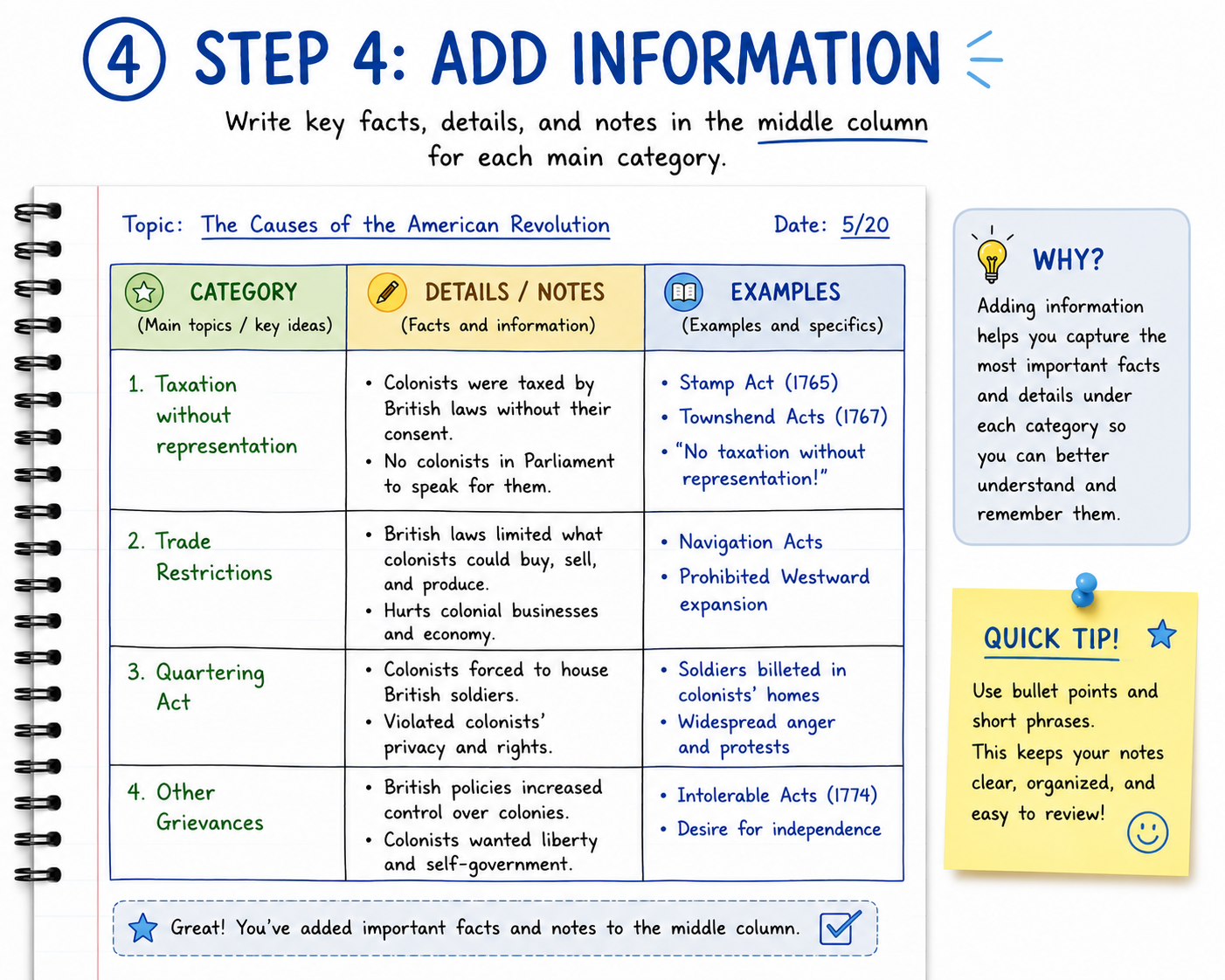
While the lecture continues or as you read, listen for information that fits your column headings and write short, concise points, not full sentences. Drop each idea into its correct column.
Don’t copy everything word for word. Filter and organize at the same time.
If the instructor jumps between topics, simply move across the row. If they begin a new topic, move down and begin a new row.
Step 5: Adjust When Necessary
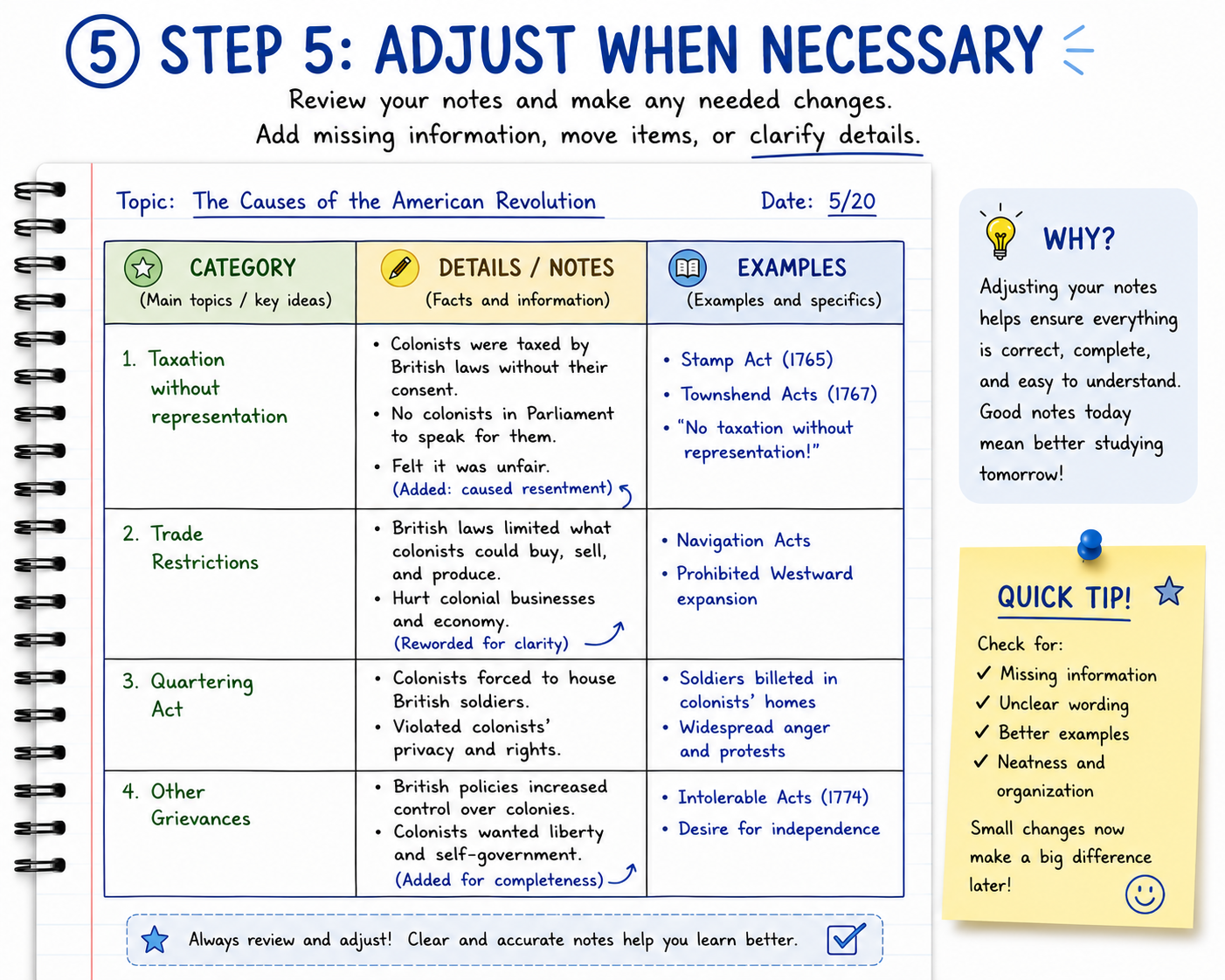
Lessons will occasionally take unexpected turns, and new categories may pop up that don’t fit your existing columns. That’s okay.
When this happens, you can add a new column mid-lecture or merge two columns if they overlap, then rename them for clarity.
Also, don’t fill the page too tightly. Leave extra space under each column to expand points during revision and insert examples.
The charting method is structured, but not rigid, and adjusting your layout is part of the process.
Step 6: Review and Refine
After class, find time to go back to your notes. This is the time to scan each column and clean up unclear points. Highlight key ideas and fill gaps while the material is still fresh.
Since your notes are already organized, revision feels less like re-learning and more like reinforcing.
Pros of the Charting Method
The charting technique makes it easy to understand, review and remember notes. Here are some of its strengths.
1. Organized Notes
The charting method keeps notes organized. Traditional methods may work in the moment, but it’s often difficult to find specific information later.
The charting method solves this by designating each piece of information its place. Every category gets its column. The result is a clean structure that is easy to follow.
Such a level of organization reduces visual clutter. You can look at a page and quickly locate what you need without having to read through paragraphs of notes.
2. Makes Revision Easier
When it comes time to revise, your notes are already sorted into categories. So, you spend less time trying to make sense of them and more time studying them.
Comparisons and important facts are easy to find since they are neatly arranged in their respective columns.
3. Reduces Information Overload
It’s easy for large amounts of information to overwhelm you, especially when dealing with lengthy reads or subjects packed with facts. Using the Sentence method can make it difficult to determine what’s important and how different ideas relate to one another.
The charting method reduces this sense of overload by breaking information into smaller, more manageable sections.
Information is separated into clear columns and categories instead of one giant block of text.
4. Helps Spot Patterns
The charting method reveals patterns and relationships that would otherwise go unnoticed.
Since information is organized into rows and columns, similarities and differences become easier to identify.
You can see related information side by side instead of comparing notes scattered across multiple pages.
Cons of the Charting Method
Like any technique, the charting method isn’t perfect. While it excels at organizing information, it also comes with its shortcomings. Here are a few.
1. Requires Advance Planning
You can’t start writing immediately with the charting method. You require a bit of preparation before the lesson begins.
You need to decide how many columns you’ll use and what each will represent. And if you end up choosing the wrong categories, you may find yourself struggling to fit information as the lecture progresses.
It may not be the best technique if you don’t have a basic understanding of the topic beforehand.
2. Not Ideal for Abstract Topics
The charting method is for when information can be sorted neatly into categories. But not every subject fits that description.
Topics that involve complex theories and deep analysis can be difficult to organize into columns. Forcing information into a chart in such situations can limit your understanding.
Combine With Other Methods
The charting method doesn’t have to work alone. If anything, it’s better off combined with other note-taking techniques to create a system that fits both the subject and learning style.
The real secret to effective note-taking is to find what works for you rather than forcing yourself to follow a single system.
Turn your notes into a chart, and you may be surprised how much easier studying becomes.