Working faster doesn’t equate to being more productive. But at times, we need to get more done in less time. You can still do that without compromising quality.
Consider these tips we’ve tested over time to help you work faster and more efficiently.
1. Plan Ahead
There’s a saying, ‘if you don’t plan your day, it will plan itself.’ And it’s true.
You’ll sit at your desk ready for work and instead, get pulled into something random. Before you know it, it’s noon and your tasks are still untouched.
Spend five minutes at the start, or better yet, at the end of your day to decide the next day’s top priorities. It doesn’t have to be neat and elaborate.
A system that works for me looks like this:
- I write down my top three priorities for the next day.
- I estimate how much time each task will realistically take.
- I slot these into my energy peak times.
This eliminates guesswork and sets a clear path forward. Once I sit down to work, I already know what I need to do.
It’s like setting a GPS before you drive. You get to your destination faster and with fewer detours.
2. Declutter Your Workspace
Having a messy desk might not seem like a big deal, but it quietly slows you down. Every time you dig for a pen or shuffle through piles of paper, you are burning precious minutes meant for focus.
A clear workspace makes it easier to think and work clearly. Now, that’s not to mean you turn into a minimalist and work with nothing but a laptop. It’s more about being intentional with what’s around you.
Does that stack of books help you every day, or is it just taking up space? What about the coffee cup that has been sitting there for days?
A trick that has worked for me over the years is the five-minute rule. Before finishing work, I spend five minutes closing unneeded tabs and tidying my desk. It’s easy enough to stick with but powerful enough to transform how I start my next day.
3. Work During Your Energy Peaks
Not all hours in the day are equal when it comes to productivity. There are times when you can power through tasks and your brain is sharp. Other times, even the simplest tasks feel like climbing a hill. Your level of focus will be different at 9 a.m. and 2 p.m.
Some of us are morning larks, while others are night owls. Study your rhythm and organize your life into it. Are you focused in the first couple of hours after waking up or is it late at night when everyone else is asleep?
Once you figure this out, schedule your most demanding tasks for these hours. You can handle the lighter stuff like routine admin work for your dips.
I personally find mornings golden. I get as much as I can during this time, then everything drags through the afternoon.
4. Eat the Frog
Eat the frog at your energy peaks. Your frog is the hardest and most uncomfortable, but also the most important task. Maybe it’s writing a blog post, or drafting a proposal. Or even having a tough conversation with a client.
Whatever it is, it’s the most important task that moves you forward the most. Schedule it for when your energy is at the peak. Either the first thing in the morning or late at night for night owls.
If you leave the hard task until later, chances are you’ll rush it or avoid it entirely. Plus, completing the task gives you a momentum boost.
Even the small tasks suddenly feel easier because you are no longer carrying the weight of procrastination around.
5. Split Big Projects
Your brain tends to procrastinate on tasks because they look big and overwhelming. They feel like a mountain that is impossible to climb.
A smart way is to split the tasks into smaller, actionable pieces. Instead of writing an entire blog post, make your first task outlining the introduction. Then the first point, and then the next, and so on.
Suddenly, what seemed like this vague monster is now a list of doable actions. So, here’s the method:
- Break one big project into milestones.
- Break those milestones into micro-tasks.
- Assign each micro-task its checkbox.
- Tick each checkbox after completing it.
Before you know it, you’ve successfully completed the big project.
6. Batch Similar Tasks
Switching from one task to another drains both your time and energy. Your brain takes a moment to adjust every time you move from updating a spreadsheet to making a call. These tiny switches throughout the day add up to hours of lost focus.
Batching tasks together fixes this. Instead of scattering tasks, batch them together and knock them out in one focused session.
Task batching is a lot like running errands. If you have to drop off laundry and pick up groceries, you’d do it all in one trip instead of making two separate trips, right?
The same principle applies to work. Make all your calls back to back and answer all emails in one go. Staying in the same mode makes you work faster and with fewer mistakes.
7. Eliminate Distractions
Staying in the same mode will only work if you aren’t constantly pulled out of it; when you don’t have a co-worker tapping your shoulder or your phone buzzing every now and then.
Distractions will sneak in and steal your time. And it does so in the little things that you don’t notice – the background chatter, the open social media tabs, and even the pile of dirty dishes staring at you if you work from home.
Take note of distractions around you and eliminate them. Leave your phone in another room when you need deep focus and use focus apps to help you work better. As for people, learn to set boundaries and politely tell them no.
8. Delegate Where Possible
Some tasks are important, but they don’t need you to personally handle them every time. Things like entering data and sending out reminders eat up chunks of your day. This is time that you could spend on more important tasks.
Delegate such tasks to people who can do them equally well, if not better. Hand over admin tasks to a virtual assistant and let a teammate handle parts of a project. Wearing every hat is exhausting and makes progress painfully slow.
Outsource things you are not great at and instead, focus on the areas where you could actually add value. The shift makes work faster and better.
9. Automate Repetitive Tasks
And when you don’t have the manpower or resources to delegate, automation works pretty well too. It’s your silent assistant that works in the background.
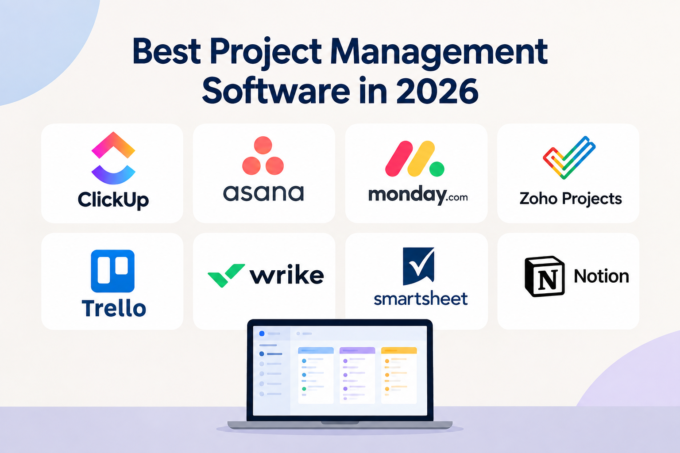
Email filters will organize your messages while calendar apps will schedule meetings and presentations. Project management tools will auto-assign tasks to your team.
Automating saves you from so much mental load. You no longer have to worry about forgetting or tedious copy-paste. It frees up your time so you can focus on the tasks that really matter.
10. Review and Reflect
At the end of the week, take time to reflect and look back. What did you accomplish? What slowed you down? And what could you do differently next time?
This kind of check is a diagnosis of your workflow. You can spot patterns that may be useful in making you work better. Maybe you are more productive in the mornings than afternoons or you procrastinate more on certain tasks.
You can then fine-tune your work to suit you even more.
Smarter Not Faster
Working faster doesn’t mean you rush through life with your hair on fire. True efficiency comes when you cut the clutter and focus your energy and time on tasks that matter.
The goal isn’t to do everything. Delegate and automate those that aren’t so important. Then focus on the ones that remain and do them well.
Now, you have more time for rest and your family.