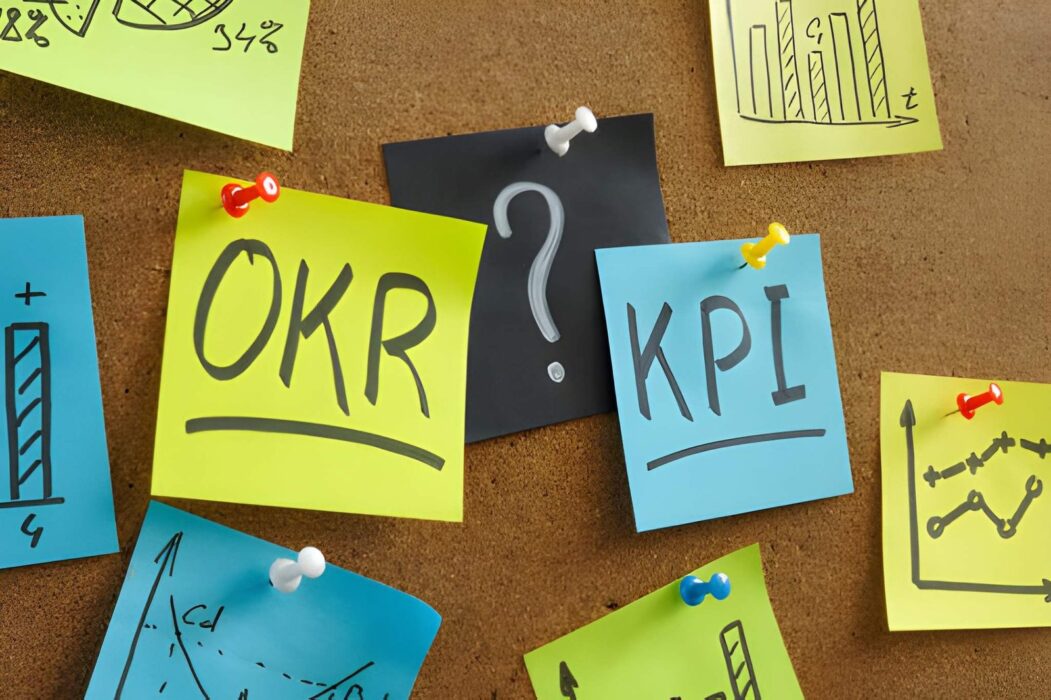
Everyone agrees they’re important, every organization uses them, yet somehow teams are unsure of what matters the most.
At their core, OKR and KPI are both used to track progress. Organizations use them to figure out where things are going well or off the rails.
They are related, but not the same. And using one when you need the other can leave you more confused.
Here’s a walkthrough of the difference between OKR and KPI in plain, beginner-friendly language. We want to make it easy for you to understand when to use each one.
What Are KPIs?
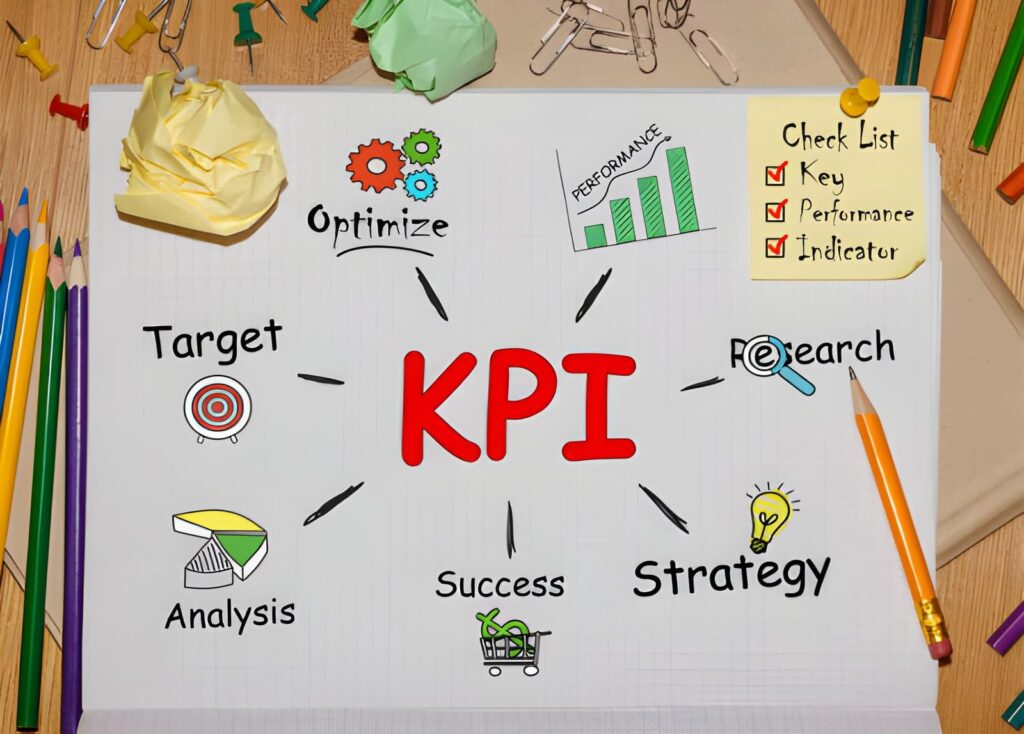
Key Performance Indicators (KPIs) are the metrics that reflect the performance of an organization and are used to monitor performance over time.
They are the numbers that tell you whether something is working or not. Like a heart rate reading, they indicate whether performance is at an acceptable level.
For instance:
- A content team may track organic traffic and bounce rate.
- A support team may care about customer satisfaction and response time.
- A business will care about profit margins and monthly revenues.
KPIs are specific and measurable and are usually relevant to actual outcomes. But what makes them different is that they are consistent and tied to daily operations.
You don’t ‘complete’ a KPI, you maintain it. You monitor it to make sure it remains healthy. If it drops, then that’s a signal that something needs attention.
KPIs tell you how well you are doing. They help you understand whether your system is functioning as expected.
But they don’t tell you where to go next; and that’s where OKRs come in.
What Are OKRs?
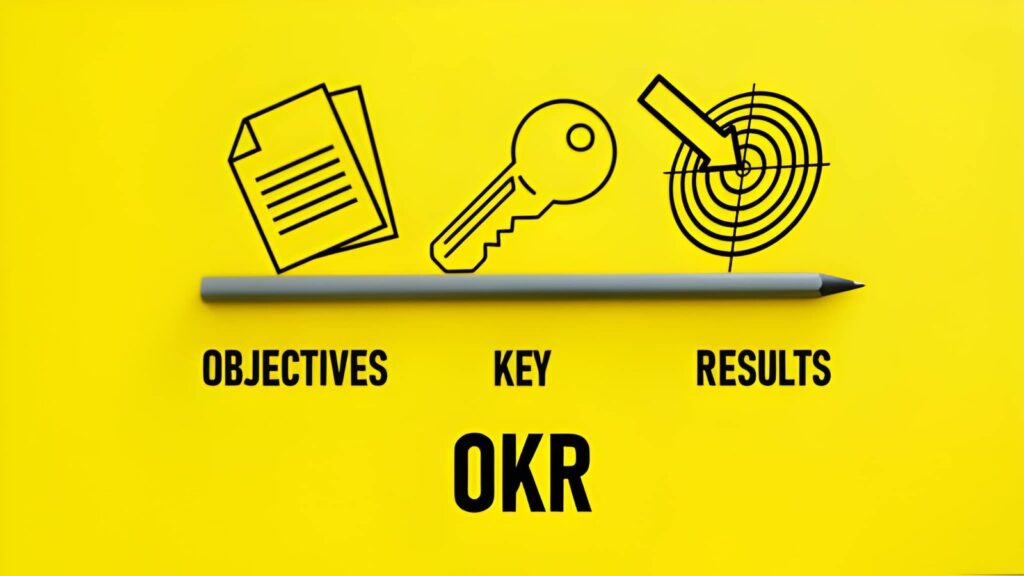
Objectives and Key Results (OKRs) are a goal-setting framework that guides you on what needs to change.
KPIs tell you how things are performing, while OKRs ask a different question: What am I trying to achieve next?
They are more about pushing growth and improvement and less about maintaining the status quo.
OKRs have two parts:
1. The Objective
This is the ‘north star’ direction. It describes where you are heading and what you want to accomplish.
For example:
- Become a leading resource for organic search traffic.
- Ship faster, more reliable products.
- Help new hires become productive faster
2. Key Results
Key results are the proof points. They explain how to know when you are making progress towards your objective.
For example:
- Grow organic traffic to 50k monthly visits.
- Reduce the shipment period from 3 days to 24 hours.
- Increase activation rate from 25% to 50%
The objectives set the vision while the key results keep them grounded in reality.
OKRs differ primarily in their intent. They are not permanent, and are set for a fixed period, usually a quarter. After that, an organization reviews, adjusts and replaces them.
OKRs guide you on where you are going and how you’ll know when you get there. When paired with KPIs, they create purpose and keep the day-to-day engine running.
Similarities Between OKRs and KPIs
As seen from the definitions, OKRs and KPIs feel a lot closer than you might have expected. That’s because they are not opposites. In fact, they share a lot in common.
1. Both Rely on Measurement
The numbers in both OKRs and KPIs act as a reality check. They cut through the assumptions and opinions and point to something concrete.
Measurement in KPIs is about consistency. In OKRs, it’s about turning ambition into something testable. Both keep teams aligned and focused on outcomes.
2. Both Support Better Decision Making
The end goal with both OKRs and KPIs is the same: to make better decisions.
KPIs help you decide when to intervene. They give a signal that something needs attention.
OKRs help you decide where to invest energy. They guide you on work that moves the goal forward.
3. Both Should Be Visible
KPIs and OKRs won’t influence behavior if no one can see or remember them. They are not supposed to live in a forgotten spreadsheet or confined to leadership. They should be accessible to all.
It is this transparency that gives them real power. Priorities become clearer when people can see the metrics they are accountable for, and how their work connects to them.
Differences Between OKRs and KPIs
1. Purpose
One of the biggest differences between KPIs and OKRs is the purpose they serve.
KPIs exist to monitor performance.
They tell you how a team or system is doing: if you’re on track, if anything is broken and if you’re meeting expectations.
OKRs exist to create change. They answer the question: what are we trying to achieve next?
They define what improvement is and push teams towards it.
KPIs keep things steady, OKRs move things forward.
2. Timeframe
KPIs are long-term. Revenue, uptime, and response time always matter. Since the underlying work doesn’t stop, you’ve got to track them continuously.
OKRs are specific and usually set for a specific period. After that, they are reviewed, and if achieved, replaced.
3. Ambition
KPIs aim for reliability. They operate within a healthy range. Swinging big is normally a warning sign.
OKRs are ambitious, and intentionally so. They are designed to stretch teams beyond the current performance.
KPIs are for maintaining standards while OKRs reward pushing boundaries.
4. What Happens When You Miss Them
Missing a KPI is a red flag. It signals risk and inefficiency and a decline that requires fixing.
Missing an OKR is not necessarily a failure. Expect partial progress since OKRs are designed to be ambiguous.
Provided there was progress and lessons were learned, it can still be seen as a positive outcome.
When to Use OKRs and KPIs
The real challenge with KPIs and OKRs isn’t knowing what they are; it’s understanding when to use each.
This decision solely boils down to whether you are trying to improve performance or maintain it.
Here’s how you can tell:
When to Use KPI
Use KPIs when your intention is to maintain things as they are.
They are best suited for ongoing, repeatable work and daily operations.
Use KPIs when:
- Consistency is more important than experimentation.
- The process is already established and working.
- You need to track the health of the business or team.
- A performance drop signals a real problem.
Good examples where KPIs would make sense include:
- Monitoring cash flow and profit.
- Watching a website or app’s performance.
- Measuring service quality and response time.
Remember, KPIs answer the question: Are we doing okay?
When to Use OKRs
OKRs are needed to move the needle.
They are for when something needs to improve or scale.
Use OKRs when:
- You are aiming for transformation or growth.
- Priorities feel unclear and scattered.
- You are trying to solve a specific problem.
- Pursuing a new opportunity.
Excellent situations to use OKRs include when:
- Launching a product or feature.
- Entering a new market.
- Improving a weak area like onboarding or retention.
OKRs answer the question: What should we focus on next?
Most of the time, the answer isn’t either/or but both. You can use KPIs to set the baseline stable and OKRs to push for improvement.
Measure What Matters
KPIs and OKRs aren’t arch-enemies designed to compete against each other. They are different tools for different jobs. The problem begins when we expect one to do the other’s work.
The first step should be to figure out what your team or organization needs. By measuring what matters, you start your journey towards real progress.