Where on Earth do I even start? That’s me staring at my to-do list with coffee in hand.
Some days, my work looks more like a mountain than a checklist. What’s worse, I keep picking off the easy stuff while the one big task that I should be tackling sits there, glaring at me.
You’re probably guilty of the same and normally end up with important tasks undone.
Brian Tracy addresses this problem in his classic productivity book, Eat That Frog. Here’s a breakdown of this technique and why it works.
If it’s your job to eat a frog, it’s best to do it first thing in the morning. And if it’s your job to eat two frogs, it’s best to eat the biggest one first.
– Mark Twain
What Does Eat That Frog Mean?
Eat That Frog was popularized by Brian Tracy in his best-selling productivity book.
Your ‘frog’ is the hardest and most important task of the day. It’s most likely the one you’re avoiding, but which will make the biggest impact once done.
Mr. Tracy suggests that everything else will feel easier if you start your morning by eating (tackling) this frog. You handle the toughest challenge first. This way, you build momentum early, then free up your mental energy for everything else later.
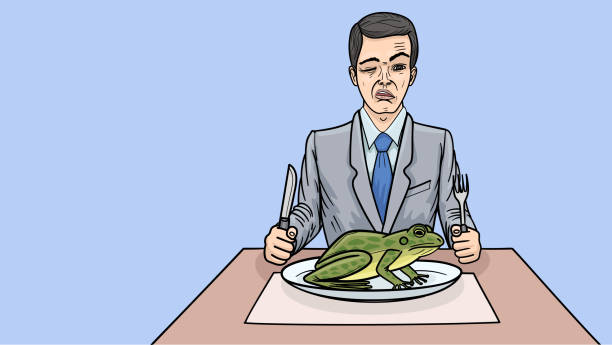
He argues that if you had to eat a frog literally, would you want to stare at it all day, dreading the moment, or would you want to get it over with?
Once you’ve eaten the frog, the rest of your tasks look a lot less intimidating.
The Eat That Frog productivity technique is designed for individuals who struggle with procrastination and overwhelming to-do lists. You’ll benefit from it if you are a:
- Student tackling exams, essays, and projects that you push aside until the last minute.
- Entrepreneur juggling dozens of businesses or responsibilities.
- Freelancers and creatives working on client assignments and passion projects.
- Anyone with personal goals, such as fitness or learning a new skill.
How to Identify Your Frog
But how do you identify which of your tasks is the frog? It’s the one that checks all these boxes.
1. First, the task is important and not just urgent. It may not scream for your immediate attention, but it will make the biggest difference in your work or life when you complete it.
2. Second, the task is challenging and uncomfortable. That’s because frogs are rarely easy. They are hard and complex, and almost always outside your comfort zone. That’s why you are putting them off.
3. The task has a long-term consequence. If you finish it today, will it have a significant effect on your future? If the answer is yes, then that’s your frog.
4. Finally, if it’s been lingering on your to-do list for days because you’ve been avoiding it, chances are, it’s a frog.
Write down your tasks and rank them by impact. Check for the one that matters the most. Once you identify it, schedule it as the first thing on your to-do list.
Also Read: The Eisenhower Matrix: Urgent Vs. Important
Why Eat That Frog Works
Eat That Frog’s success can be attributed to its psychology and energy management.
1. Fights Procrastination
We procrastinate mostly because we avoid tasks that feel big and uncomfortable. But when we choose to tackle these tasks first, we break the cycle of avoidance before it even begins.
2. Creates Momentum
Once you’re done with the day’s hardest job, everything else feels lighter. It comes with a sense of accomplishment that gives you the motivation to keep going.
Like pushing a heavy rock, once it starts moving, it rolls more easily.
3. Reduces Stress
The stress of avoiding an important task is worse than the task itself. By finishing the difficult tasks, we gain more confidence and end the day with less guilt and stress.
4. Forces You to Prioritize What Matters
Which task is your frog? The technique pushes you to organize your tasks and figure out which one matters the most. This way, you avoid wasting energy on busy tasks that don’t move the needle.
The 21 Principles of Eat That Frog
Once you understand why eating the frog is so powerful, you need to know how to put it into practice every day. Tracy breaks down 21 practical strategies to fight procrastination and make progress.
1. Set the Table
You need clarity before you can take action. Setting the table implies deciding exactly what you need to do. Write it down, set a deadline, and work on it.
When writing down your goals, Tracy emphasizes that they should be specific and measurable. Vague goals like ‘get healthier’ or ‘be more productive’ don’t give you a clear direction.
Instead, write something like ‘exercise three times this week’ or ‘finish a blog post by tonight.’ Defining your goals clearly gives your brain a target to aim for.
Like setting the table before a meal, you prepare the space. When the time to ‘eat the frog’ comes, you’re ready to dig in without hesitation.
2. Plan Every Day in Advance
Productivity is by design, not accident. Take a few minutes first thing in the morning, or better yet, at the end of the previous day, to plan your tasks. Write down what you need to do for direction.
The Getting Things Done technique tells us that our brain isn’t a storage unit. Create a to-do list to save you hours of wasted time and mental energy. You are more likely to get the task done when you write it down.
3. Apply the 80/20 Rule to Everything
Not all tasks are equal. The Pareto Principle reminds us that 20% of what we do will often produce 80% of the results. That means a majority of your tasks aren’t as important as you think.
Figure out what these tasks are (the frog) and focus your energy here. Double down on the work that matters and don’t sweat the small stuff.
4. Consider the Consequences
The choice you make today will have a ripple effect on your future. To be effective, think long-term before deciding how to spend your time.
Ask yourself: what difference does this task at hand make tomorrow, next week, and next year? If it has a massive consequence, then rank it higher on your priority list.
You make better decisions when you focus on the long-term payoffs.
5. Practice Creative Procrastination
As productive as you are, you cannot do everything. Brian Tracy recommends procrastinating intentionally. That means saying ‘no’ or ‘not now’ to the unimportant stuff.
You can choose to delay, delegate, or completely drop the low value tasks that don’t add much value to your life.
Procrastinate on purpose, but do so wisely.
6. Use the ABCDE Method Continually
With the ABCDE method, you label each item on your list from A to E, with A being the most important and E the least important. Focus on the A tasks before moving to anything else.
Delegate tasks marked D and eliminate those marked E.
A – Must do tasks, serious consequences if left unaccomplished
B – Should do (mild consequences)
C – Nice to do (no real consequences)
D – Delegate (let someone else do it)
E – Eliminate (not worth your time and energy)
7. Focus on Key Result Areas
Every job or task comes with a few key result areas. These are the things you must do well to succeed. For instance, for a salesperson, this might be closing deals or prospecting. Neglect these, and your performance suffers.
Tracy advises identifying your key result areas and giving them consistent attention. Sharpen your performance in these critical areas to achieve significantly better results with less wasted effort.
8. Apply the Law of Three
The law of three states that most of your value at work and in life will often come from three core tasks.
If you take a moment to evaluate everything you do, three activities will contribute to your success more than anything else.
Tracy asks you to identify these three activities and make them your focus. Guard your time and do these three things really well.
9. Prepare Thoroughly Before You Begin
Starting a task unprepared is one of the easiest ways to kill productivity. You sit down, ready to work, then you realize you are missing tools or notes. Then you waste time chasing these down instead of working.
Brian Tracy emphasizes the importance of thorough preparation as a way to eliminate these disruptions.
Ensure you have all necessary materials in front of you before you begin working. Remove friction and excuses at the start, and you give yourself the best chance to stay focused till the job is done.
10. Take It One Oil Barrel at a Time
Most of the time, big projects can feel so overwhelming that you’re not sure where to start. Brian Tracy uses the analogy of crossing a desert with oil barrels placed at intervals.
Instead of focusing on the entire journey, you simply aim for the next barrel, then the one after that.
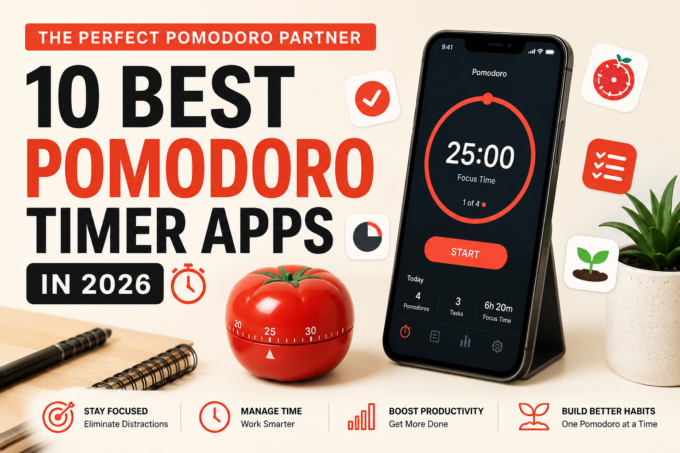
In other words, use the Pomodoro technique. Break down big goals into small and manageable steps. Focus only on the next step.
Progress happens one Pomodoro (or barrel) at a time.
11. Upgrade Your Key Skills
The better you become at something, the easier and faster it becomes. Brian Tracy encourages constant learning to improve key skills. Take time to read, take courses, and practice deliberately.
By improving your skills, you increase your value and ultimately save time.
12. Leverage Your Special Talents
We all have unique strengths at which we naturally excel. Tracy advises you to identify these talents and lean towards them.
You are more likely to feel less drained and work faster when you align your work with your strengths. Aim for the things you can do best instead of trying to be average at everything.
13. Identify Your Key Constraints
Like our special talents, we also have key constraints. There will always be something limiting your progress. Maybe it’s a missing skill, or a lack of resources, or even a bad habit.
Identify the biggest bottleneck holding you back and work on removing it. You’ll realize that by fixing it, you unlock massive growth and make everything else easier.
14. Put the Pressure on Yourself
Don’t wait for an external deadline to take a task seriously. Learn to create your own pressure. Set a personal deadline and challenge yourself to complete it within the given time. You can even use a Pomodoro timer to help you stay focused.
Take ownership of the clock and stop waiting for outside accountability. You’ll be surprised by how much you’ll get done in less time.
15. Maximize Your Personal Powers
What time of the day is your energy the highest, and when does it crash? Schedule your most important tasks during your peak hours. Then protect this energy by getting enough rest and avoiding burnout.
16. Motivate Yourself into Action
Motivation is something you create, not something you wait for. Remind yourself frequently why the task at hand is important. Take the first small step, then the next. Momentum will build slowly and naturally follow the motivation.
17. Get Out of the Technological Time Sinks
Social media and endless scrolling can eat up your hours without you even noticing. Avoid falling into these digital traps.
Take control of your tech use. Turn off unnecessary alerts and check email at set times. Also, put your phone out of reach when working. Technology should serve your goals and not steal your attention.
18. Slice and Dice the Task
Your brain will automatically resist a task when it feels that it’s too big. The solution to this is to ‘slice’ the task and ‘dice’ it into smaller, bite-sized parts.
Write just one paragraph instead of the entire blog post and make one call instead of ten. Each slice lowers the barrier, and before you know it, you’re almost done with the task.
19. Create Large Chunks of Time
Your most important task will require deep focus. You need to time-block uninterrupted periods in your schedule to handle it. That means turning off distractions and committing fully to it.
Large chunks of focused time will allow you to enter a state of flow, where you will produce at a much higher level.
20. Develop a Sense of Urgency
Successful people work with a sense of speed and urgency. They cultivate a bias for action and move quickly without delaying or overthinking.
By developing this habit of urgency, you are likely to accomplish more in a day than most people do in several days. Action beats hesitation every single time.
21. Single-Handle Every Task
Finally, Tracy warns against multitasking. It may feel productive, but in reality, it slows you down. Once you start your frog, stick with it till it’s finished. No checking messages ‘just for a minute’, no bouncing between tasks, no multitasking.
When you handle single tasks at a time, you are likely to finish faster and also with better quality. You then free up your mind to move on without unfinished business hanging over you.
Worth the Try
Eat That Frog helps you tackle the hard and uncomfortable tasks before they grow into monsters that weigh you down. Sure, it takes practice, and you’ll slip sometimes. But once you get the hang of it, everything becomes lighter and more productive.
The next time you sit down to start your day, ask yourself, ‘What is my frog?’ Then take a deep breath and dig in.