
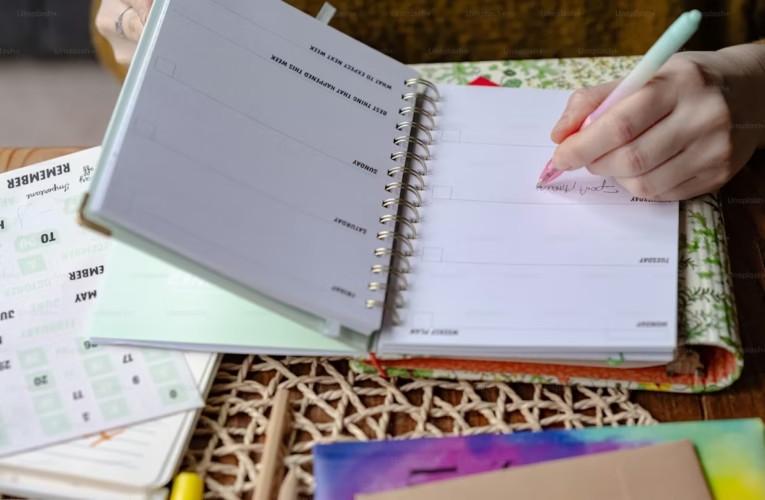
You’ve probably read many times that journaling is good for your mental health and personal growth. That it helps you gain clarity.
And maybe you’ve even tried it, once or twice. But every time, you find yourself staring at a blank page, unsure of what to write or where to begin.
The truth is, writing doesn’t come naturally to many of us, and that’s okay. Journaling isn’t about being perfect or poetic; it’s about keeping track of your life one word at a time.
Here’s a beginner-friendly guide to walk you through the basics of journaling– how to start and why so many people swear by it.
Why You Should Journal
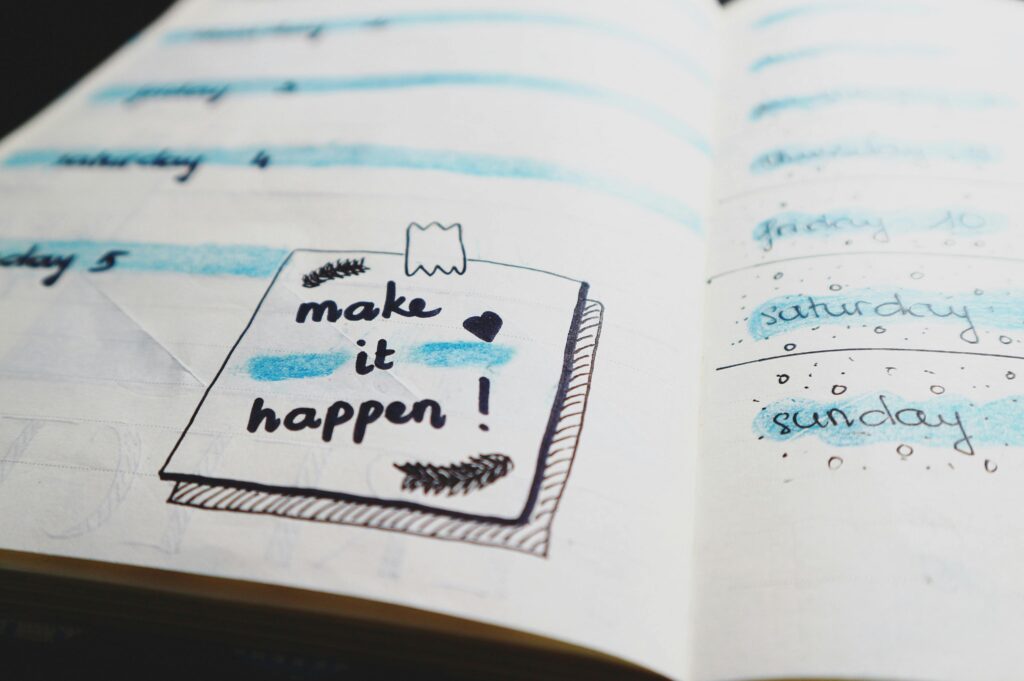
Let’s start with the why.
Why should you journal? Well, the benefits are numerous.
1. Tracks Progress
Journaling creates a timeline of your growth. The goals you set, the habits you tried to build (and sometimes abandoned)– it’s all there. Even the times when you felt like you were running in circles without making any progress.
A year later, you’ll sit and flip through your old entries and realize you survived it all. That time you thought you were falling apart? Turns out, you made it through. And the idea you scribbled down on a whim? Guess what? It became something real.
And what’s better is that now you have pages about everything you once felt you couldn’t put in words.
Progress isn’t linear, and it’s often quiet. It is subtle most of the time, and your journal captures it better than your memory ever could.
2. Clears Mental Clutter
Our minds are chaotic, filled with racing thoughts, countless worries, and to-do lists that never seem to end. Journaling is like hitting the reset button.
I’m not sure if it’s just me, but something magical happens whenever I put my thoughts onto paper. My mind quiets down. I give my thoughts a place to land so they stop bouncing around in my head all day.
The result is a calmer, lighter, clearer mind. With that clarity comes the mental space to live in the present.
3. Improves Writing
You don’t have to be a professional writer to journal. But the more you do it, the more natural your writing gets.
When you are writing without pressure, deadlines, or someone grading your grammar, your sentences tend to flow more easily. With time and practice, your vocabulary expands and your writing becomes more confident.
Even if no one else reads what you write, it still feels nice knowing your writing has improved.
4. Reduces Stress
When life gets heavy, we all need somewhere to vent. Journaling helps lay all those jumbled and anxious thoughts out where you can see them. And once on paper, they feel less overwhelming.
Everything becomes manageable. You can then begin to understand what’s bothering you instead of being overwhelmed by a vague cloud of “something’s wrong” feelings.
5. Helps You Sleep Better
One bedtime routine experts recommend is jotting down the next day’s to-do list. This does two things. One, it gives your mind a chance to unload. And two, it prepares you for the next day.
For those of us working from home, it also means a schedule is already in place when the day begins.
How to Start Journaling

Now to the how.
What are you supposed to do with a blank page? One of the beauties of journaling is that there’s no wrong way to do it. You are not writing a book or a blog post.
Your journal is your space to think and reflect. Here are a few starting guides to help you out.
1. Choose Your Format
No rule says your journal has to be a fancy leather notebook, unless, of course, you want it to be.
Your journal should be whatever makes it easy for you to keep coming back. That could mean:
- A journaling app like Notion or Journey
- A Google Doc that you update from your laptop
- Your phone’s Notes app for quick thoughts
- A lined notebook
What matters is that it is accessible and convenient. If you’re a technophile, digital options may be more appealing.
If you are old-fashioned like me and love the tactile feeling of a pen on paper, there’s no harm in staying analog.
Whatever makes you write.
2. No Rules
You are not being graded or watched. There is no editor, no audience, and no judgment.
You have the freedom to get as messy as you want. You can write in the messy handwriting your teacher warned you about.
You can switch tenses, write in all caps, or make spelling mistakes. It’s fine if entries jump from thought to thought.
Journaling is about honesty, not polish. Let it be raw and weird because that’s who you are. Once you stop trying to “do it right,” you’ll find yourself writing more freely and more often.
3. Start Simple
Keep it simple when starting. If you can fill an entire page, do so. If not, begin with a few lines. Write whatever comes to mind. Maybe a list of what happened that day, or what made you happy.
It may look something like:
“I’m happy today because I accomplished several things.
- I went to the gym
- Prepared a nice meal
- Completed my work assignment
- Took a stroll around the neighborhood
The point isn’t what you write, it’s that you write. The more you do it, the easier it gets. Over time, these short entries will naturally become deep without forcing anything.
4. Try Prompts When Stuck
Even seasoned journalers get stuck occasionally. Prompts come in handy when this happens. They give your brain a starting point instead of starting from scratch.
A few examples include:
- What am I grateful for today?
- What is currently stressing me?
- What has today been like?
5. Consistency
Like productivity, journaling works only if you do it consistently. By this, I don’t mean daily (unless you want to).
A trick that works for me is choosing a moment in the day when I feel calm and undistracted. For me, that’s right before my bedtime. For you, it could be the first thing in the morning or during a lunch break.
By picking a specific time, you create a space where your brain knows, “This is the time I check in with myself.”
You can even make the experience more pleasant by playing soft music or grabbing your favorite drink. This way, you’ll be more likely to return to it again and again.
6. Make it Yours
As mentioned earlier, there are no rules here. If you’d like to use stickers, draw, or doodle, go for it. If you prefer neat pages with date-stamped entries, that works as well.
Your journal is a reflection of you. And the more connected you feel to it, the easier it will be to keep the habit.
Go Ahead and Write
It’s difficult at first, but it becomes easier as you go on. Along the way, you begin to hear yourself more clearly and see how far you’ve come. You get to remind yourself that you are growing, even on the messiest days.
So, go ahead. Open the notebook. Tap the keys. Write the first word. Then the next.








Leave a comment