Between work and family, it’s easy to forget the one person who holds it all together: you!
As the year unfolds, this is a gentle reminder to pause for a moment and put yourself back on your priority list.
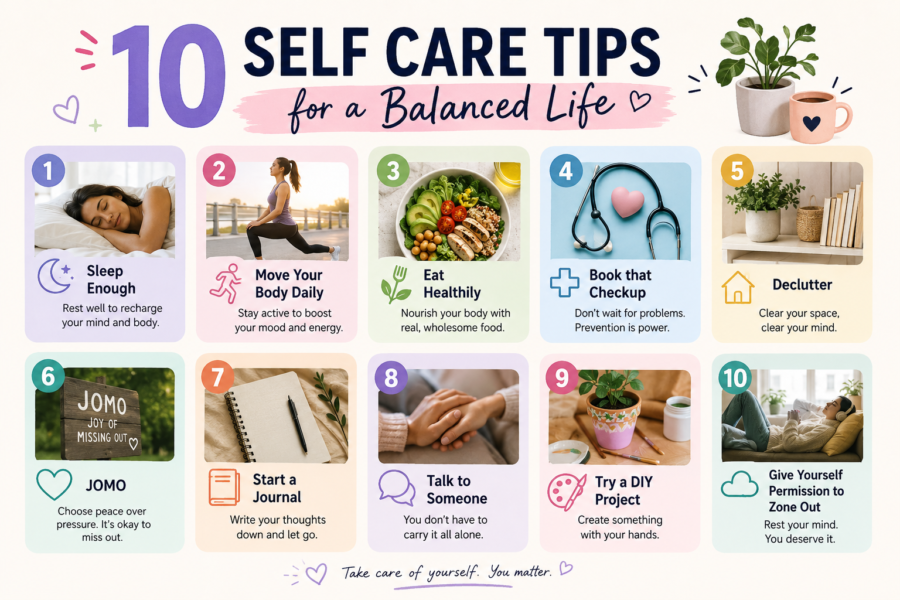
Here are 10 tips to help you feel better in your mind and body. Nothing fancy, just small, intentional changes that make a big difference over time.
1. Sleep Enough
Sleep to your body is what rebooting is to computers. We tend to push sleep aside when life gets busy, yet it’s one of those things we all need.
When you are well-rested, everything feels a bit easier. You are less grumpy and can begin your day focused and fully energized.
As part of your bedtime routine, try to get to bed early and aim for 7 to 9 hours of sleep each night.
2. Move Your Body Daily
You don’t need to run a marathon or hit the gym at 5 a.m. Just move. Take a stroll in the morning and during your lunch break.
Dance while you clean and stretch in the evening. Do whatever feels good for you as long as it gets your body moving.
When you move, you ‘shake off’ your stress and boost your energy. Movement is medicine. If you can do a full workout, great. If you can stretch for five minutes or take a stroll, that also works.
3. Eat Healthily
With so much conflicting advice out there, it can be confusing what eating right is about. I’m not a nutritionist, and likely not the best person to advise you on this. But I know you don’t need to overhaul your entire diet or label food as good or bad.
For me, it’s how food makes me feel; in the moment and afterward, too. If it leaves me bloated and sluggish, then I try to avoid it.
Most of the time, I try to build my meals around whole foods, such as veggies, proteins, and healthy fats. But occasionally, I also enjoy a snack and dessert.
4. Book That Checkup
It’s probably been a while since you last saw your doctor, right? Many of us put off checkups because we are too busy or feel fine, until we don’t.
Preventive care is important because your doctor gets to catch little things before they become big. You are being proactive about your health, which is an underrated form of self-care.
Don’t put it off until next week. Go ahead and make the call. It only takes a few minutes. It’s okay to be nervous; it’s what makes us human.
5. Declutter
Have you ever noticed that everything feels heavier when your space is a mess? You’re not imagining it. Clutter has a way of messing with your mood and focus.
This is not to mean that your place has to be sparkling clean. Start small by clearing what you no longer need.
Toss out the stuff that’s broken and donate what you don’t need. Create more space so that the room serves you. You don’t need to do it all in one day. Even five minutes of tidying can shift your mindset.
6. JOMO
Joy of Missing Out (JOMO), FOMO’s biggest archenemy, is what happens when you stop pressuring yourself to say yes to everything, and instead choose what actually feels right for you.
If it has been a long day and you are too tired, it’s okay to skip that party and have a quiet night in. The joy comes when you choose yourself instead of conforming to social norms. You don’t have to be everywhere and do everything to feel fulfilled.
7. Start a Journal
Everyone who is carrying a lot in their head (which is most of us) needs a place to let some of it out. That’s why journaling is important.
You don’t need rules, structure, or beautiful handwriting to start journaling. Only a notebook or a journaling app and a few quiet minutes.
Write down whatever is in your mind: what you are feeling, what’s stressing you out, things you are grateful for, and what you want your future to look like. There is no right or wrong way to do it.
Start small and don’t overthink it. You might be surprised how calming it is.
8. Talk to Someone
Sharing your problems with others doesn’t make you weak. Find someone to talk to when you’re stressed and overwhelmed. It helps.
And it doesn’t always need to be about getting advice. At times, it’s just about being heard. The kind of talk where you don’t feel rushed or judged, where you can be honest about how you are really feeling. That kind of space is healing.
9. Try a DIY Project
Another underrated form of self-care is working with your hands. It doesn’t have to be big or fancy, just something that pulls you out of your head and into the moment. Build something, paint a shelf, plant herbs. Make a vision board.
DIY projects give you a sense of accomplishment knowing you built or fixed something. Plus, in the end, you end up with something beautiful or useful that you made yourself.
10. Give Yourself Permission to Zone Out
You don’t have to be productive all the time. Not every hour has to be optimized. At times, you just need to zone out, and that’s fine.
Take time to rest and not think about work. Read a novel or binge-watch your favorite sitcom. This is also the best time for the DIY project.
The next time you find yourself not doing anything, don’t feel bad. Lean into it. You don’t always have to be doing something to be okay.
Feel Like Yourself Again
These self-care goals are not about fixing everything overnight. On some days, you’ll do all of them; on other days, none. Progress isn’t measured in perfection but in small and steady steps.
As you move through the year, remember that taking care of yourself is not selfish, it’s necessary. Be kind to yourself and take one goal at a time.