Among the many academic flexes Cornell University has to brag about, including world-class research and famous alumni, surprisingly, one of the most popular ones is its note-taking system.
If you’ve ever flipped through your old notes and wondered what on earth you were thinking when writing them, you’ll appreciate this method.
Here’s everything you need to know about the Cornell note-taking method.
What is the Cornell Note-Taking Method?
The Cornell Note-Taking method was developed in the 1950s by education professor Walter Pauk at Cornell University. His goal was to help students take better lecture notes and learn from them, rather than just copying information.
Decades later, the method remains one of the most popular and widely used note-taking systems.
How it Works:
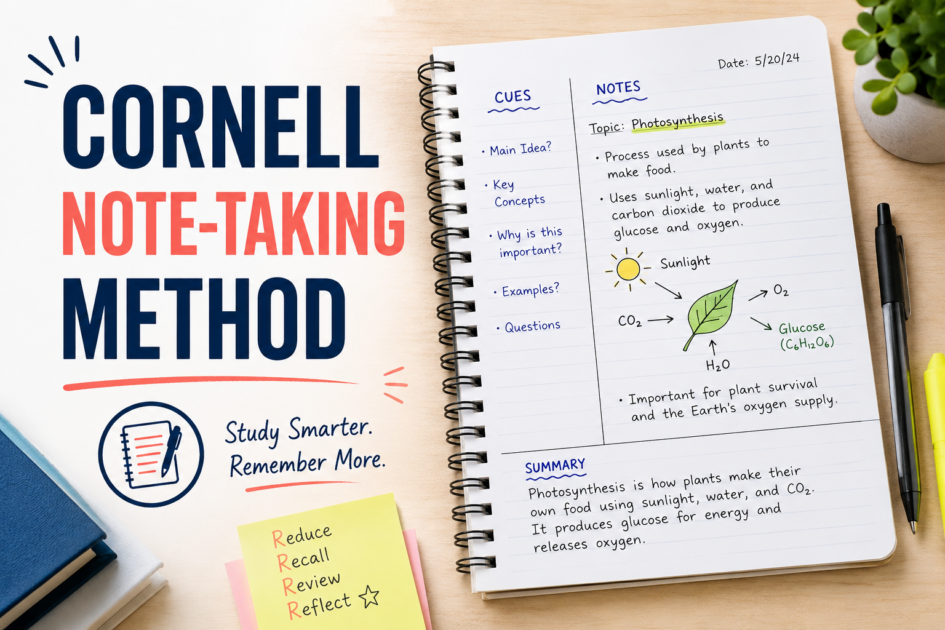
The Cornell method divides your page into two columns and a summary section:
The right column is the note-taking area. It’s where you write the main ideas and supporting details during a lecture or meeting.
The left column is for the cue column. Here, you write short keywords, questions, or prompts that summarize the notes on the right. These help with quick review.
Then the bottom is the summary section. It’s where you write a short summary after reviewing your notes.
It’s a simple layout that simplifies everything. It organizes your thoughts and makes you engage with what you are writing.
Who Is It For?
The short answer is that the system is for anyone who needs to remember things and make sense of information.
Even though the method started in lecture halls, it is now used in many different settings. Here are the categories of people who will get the most out of it:
- Students and learners and anyone taking any kind of courses, online or in person. The method pushes you to think critically and move beyond just copying what the teacher says.
- Professionals in meetings and those juggling multiple projects or keeping track of client discussions.
- Writers and researchers who need to organize ideas as they go. It’s a clean way to keep ideas connected.
How to Use the Cornell Method
Divide Your Page
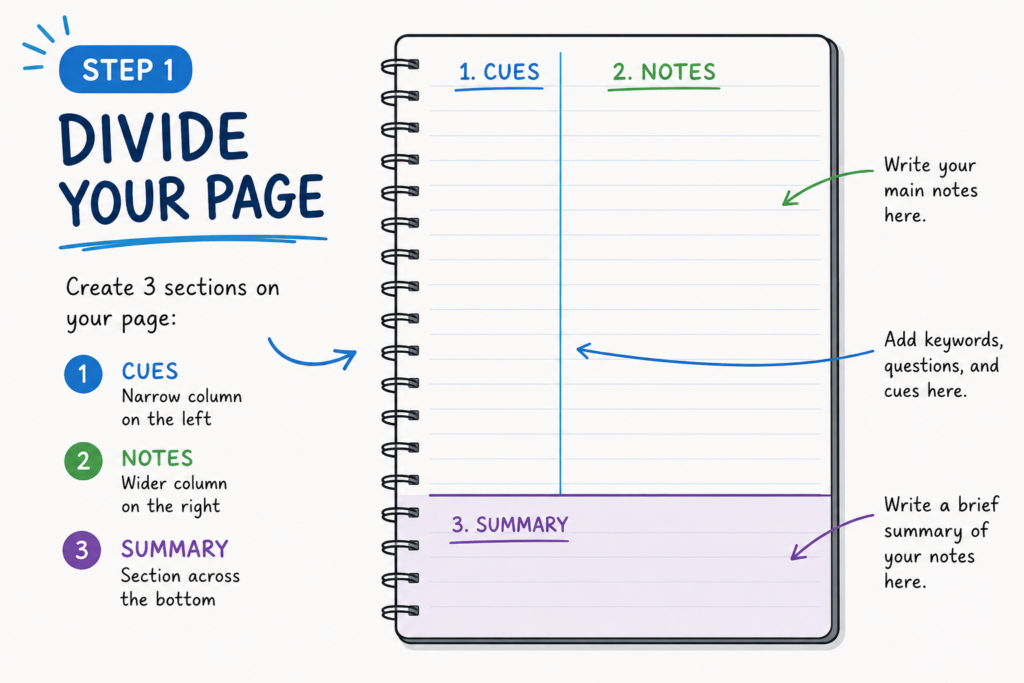
Before you begin taking notes, divide your page into two columns by drawing a line roughly 2½ inches (about 6 cm) from the left edge of the page. Leave about two inches of space at the bottom.
Designate the right side for the main notes, everything you hear or read, while the left side is your cue column. It’s where you’ll write questions and prompts later.
The bottom part is for writing short summaries.
Record Main Notes
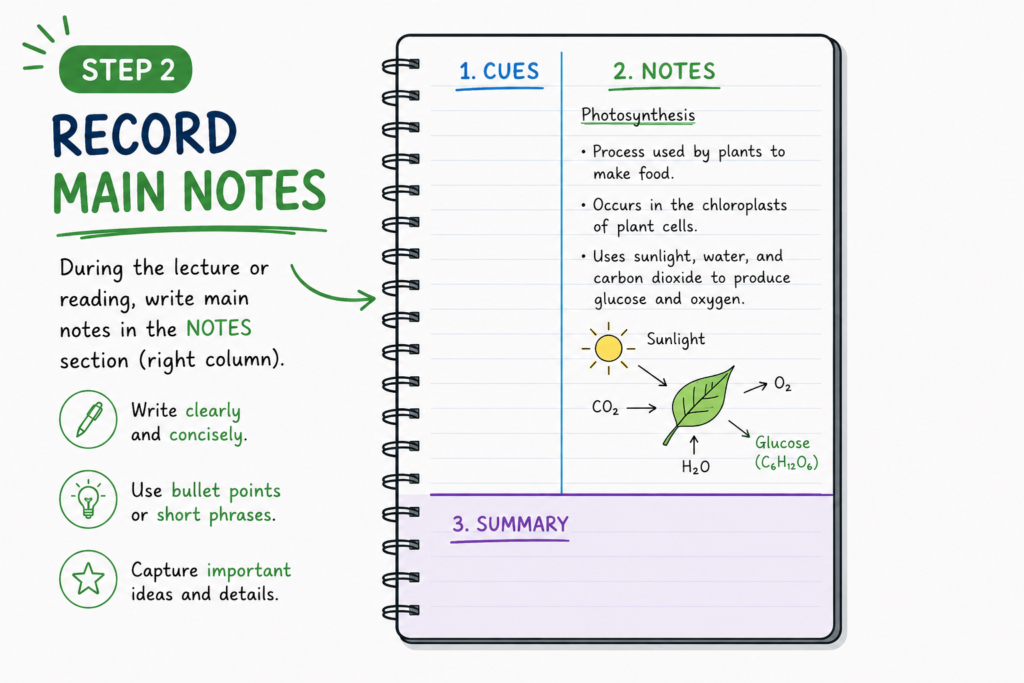
Jot down the main ideas and examples in the right column during class or a meeting. Don’t record every word said. Instead, focus on capturing meaning and not sentences. Use abbreviations and bullet points to keep up.
Remember, your goal is to capture key ideas, not transcribe every word.
Reflect
After the session (ideally the same day), go back to your notes and fill in the left column. Write cues and questions that summarize and connect to the main ideas on the right.
For example, if the right side covers how photosynthesis converts sunlight into chemical energy, on the left, you can write, ‘What is the main purpose of photosynthesis?’
Such a question forces your brain to engage with the material. You turn raw notes into something meaningful and personal, and it’s where real learning happens.
Recite and Recall
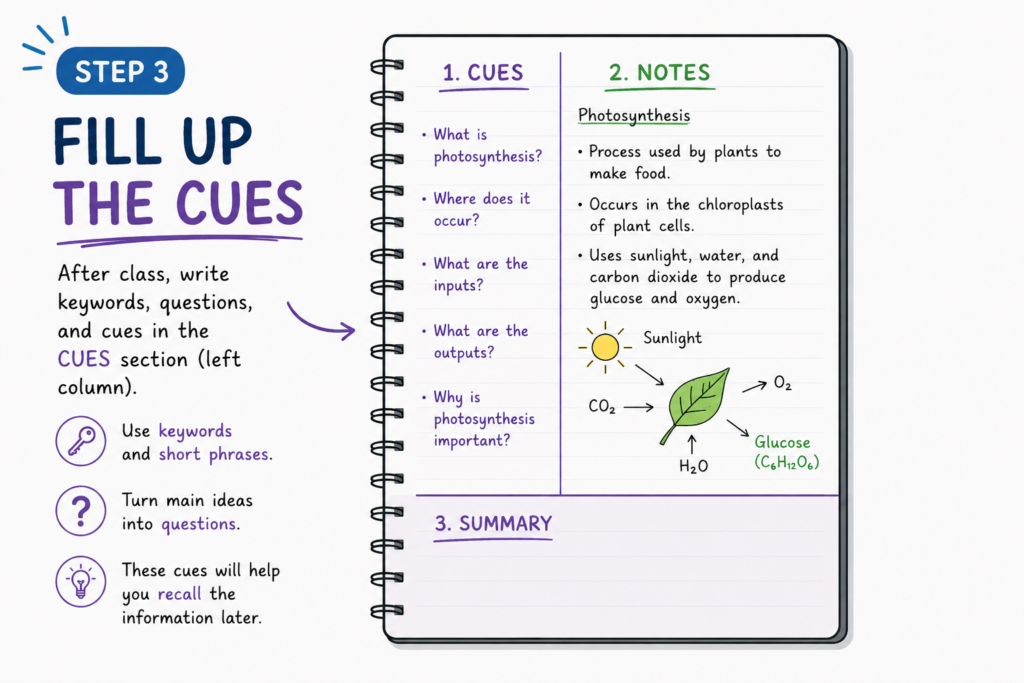
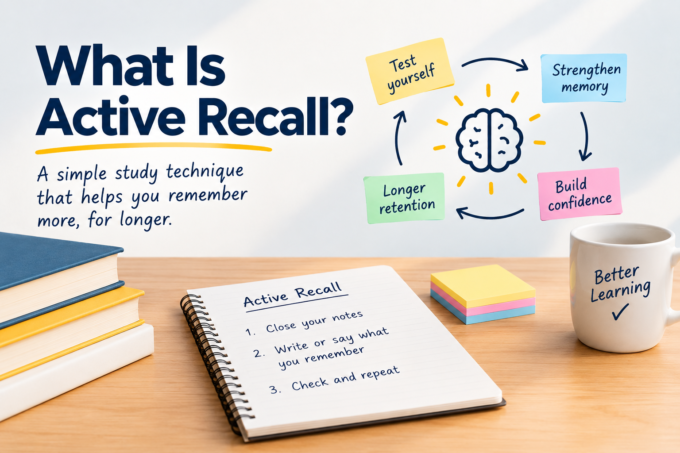
You know you’ve learned a concept if you can explain it without looking. To help you achieve this, cover the right column and use only your cues on the left to recite the information out loud or in your head.
This is called active recall and is a widely used learning technique.
Summarize and Review
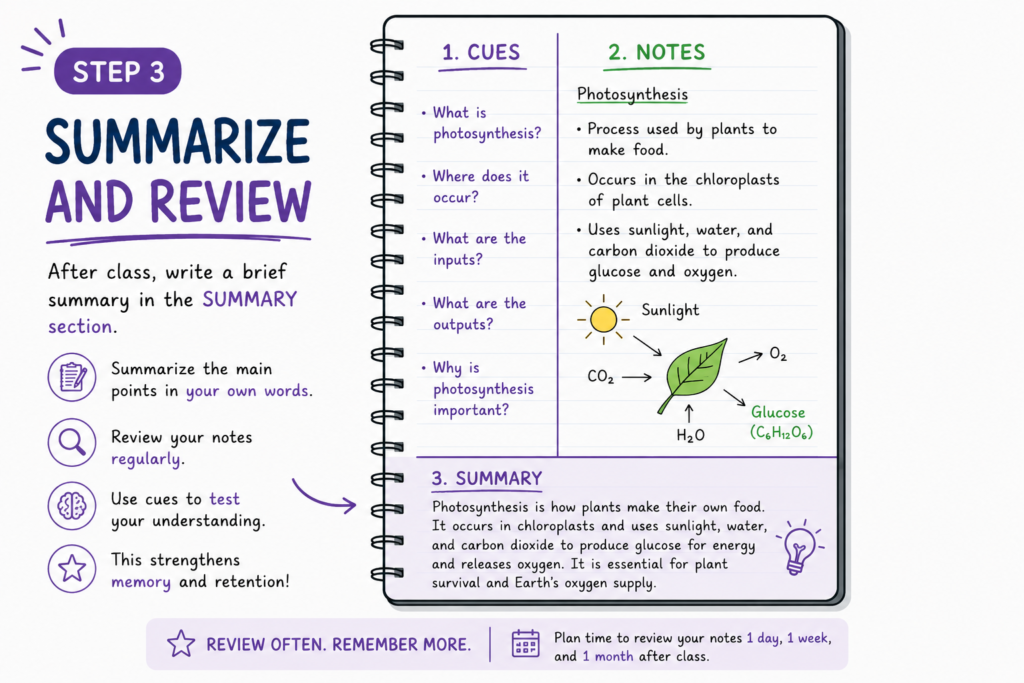
Write a quick summary in the bottom section using your own words. Use two or three sentences to capture the main takeaway.
Then review your notes periodically to get the full benefit. You can go through your notes for a few minutes a day or once a week. The structure makes revising super easy because everything’s already organized.
Why the Cornell Method is so Effective
It’s simple and powerful, and that’s what makes the method effective. Here are a few reasons why it works so well.
1. Promotes Active Learning
There’s a difference between transcribing and Cornell taking notes. One involves writing down everything without really thinking about it. And the other divides your page into cues and a summary to engage your brain.
The Cornell method forces you to interact with your notes as you go. Splitting your page into main notes, cues, and a summary helps you process information.
You decide what’s important, how it connects, and how you can phrase it in a way that makes sense to you.
2. Simplifies Complex Information
It’s easy for the main point to get lost when ideas overlap and paragraphs run into each other.
The Cornell method gives your ideas a clear layout. The right column is for the main points and the left for short cues and keywords.
Suddenly, even the most complex information starts to make sense because it is organized logically and visually.
3. Repetition Strengthens Memory
You forget things because you never go back to them. You take notes, close your book, and hope for the information to stick magically. Spoiler: it doesn’t.
The Cornell method builds repetition and review naturally into your workflow. Each step makes you revise the material in a different way.
Such repeated exposure moves information from your short-term memory to your long-term memory, where it lasts.
4. Saves You Time Later
The Cornell method takes a little more effort at the start, but it saves you tons of time in the long run.
Since the information is already organized, it eliminates the hours you’d spend re-reading messy notes and highlighting them. What would take you hours to review, you can now do in minutes.
You do all the hard work at the beginning, then you reap the benefits every time you sit down to review.
Organizes Ideas
So, yes, Cornell University can brag about many things, but this note-taking method remains one of its most practical innovations.
In a world full of information overload, you may stand out for knowing how to capture and organize your thoughts.