Everything on your to-do list seems important. You’ve got a report to finish, a blog post to write, and a long list of tasks that somehow run through your entire afternoon.
Since you probably can’t accomplish everything, you need a system that lets you prioritize what’s most important.
The ABCDE method is this system—a smart way to rank what matters and what can wait.
Here’s everything you need to know.
What Is the ABCDE Method?
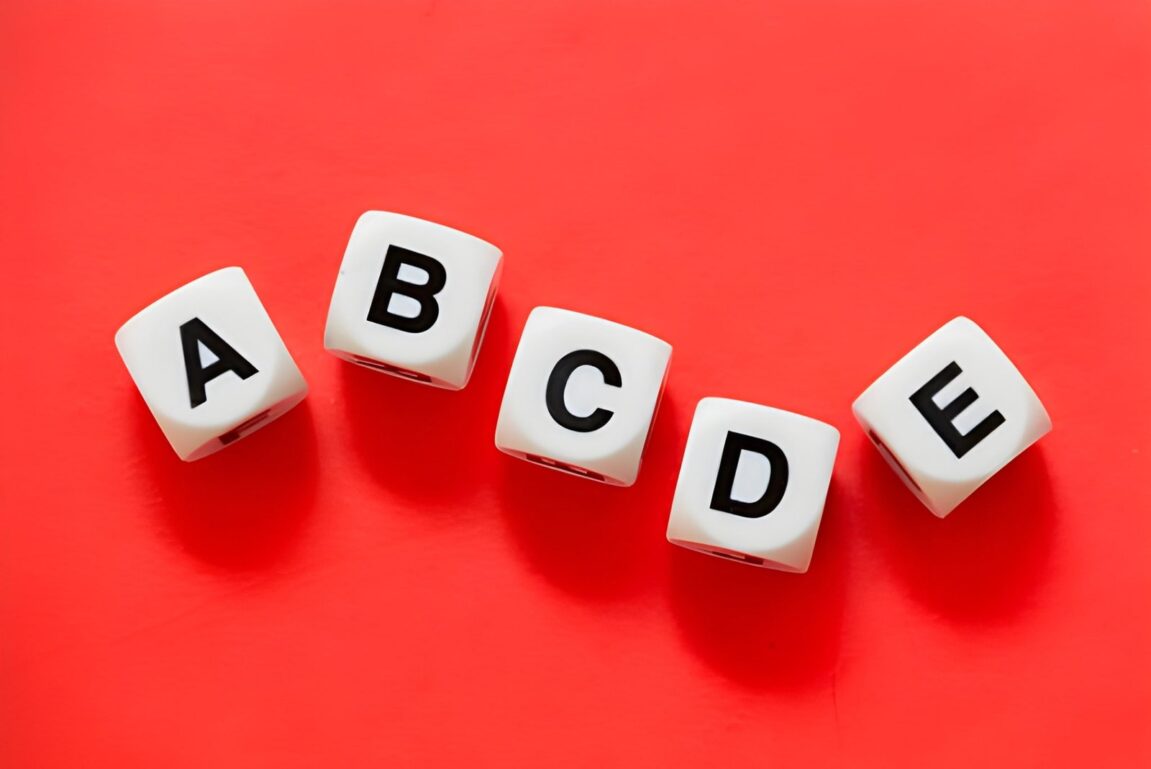
The ABCDE method helps you decide what deserves your attention before you begin working. Similar to the Eisenhower Matrix, it groups tasks according to their importance and consequences.
The five groups are:
A Tasks – Must Do
A tasks are non-negotiable. You either accomplish them or you risk real consequences. If you fail to complete them, something likely breaks. Perhaps you miss a deadline or money is lost. And the stress will spill into tomorrow.
To identify an A-task, ask yourself, ‘What happens if I don’t complete this task today?’ If the answer is something serious, then it belongs here.
Most A tasks are usually:
- Time sensitive decisions.
- Urgent problems that you cannot ignore.
- Work with hard deadlines.
- Income and performance tied tasks.
The golden rule with A tasks is that you treat them as the frog. That means you handle them first before touching anything else. A1 comes first, always.
Once you complete them, the rest of the tasks feel way lighter.
B Tasks – Should Do
B tasks are still pretty important, but unlike A tasks, they don’t bite immediately. Their consequences are delayed, and nothing will explode if you don’t do them.
But if you ignore them long enough, they quietly turn into A tasks. And this usually happens at the worst possible time.
Common B tasks include:
- Follow-ups that aren’t urgent.
- Health checkups
- Learning and skill building
- Planning ahead
These are some of the smartest things you can do for yourself, but they are also the easiest to procrastinate. Since they don’t shout for attention, you push them aside for louder and less important work.
Once you are done with A tasks, shift your entire focus on the B tasks.
C Tasks – Nice to Do
Unlike the As and Bs, C tasks don’t have any consequences whether you do them or not. They feel productive, but don’t really move the needle.
They are pleasant and relaxing, and are very good at stealing time from what truly matters.
Most of our ‘busy days’ are usually filled with C tasks:
- Scrolling social media
- Casual chats
- Checking emails
- Small errands without deadlines
C tasks are not necessarily bad. But you need to understand that they are not priorities. They only become a nuisance once you start using them as avoidance. When you tell yourself you are being productive, but you’re really just staying comfortable.
The trick is to use C tasks as rewards and not starters. You earn them only after completing A and B tasks.
D Tasks – Delegate
D tasks don’t require you, that means you should delegate them. Find someone (or a system) to handle it and take it off your plate. This applies to both work and personal life.
Delegation occurs in a number of ways. You can:
- Hand off tasks to a colleague.
- Automate recurring tasks.
- Outsource freelance or admin work
In short, you are asking for help instead of doing everything yourself.
E Tasks – Eliminate
E tasks are distractions and should not exist on your to-do list at all. Therefore, you must eliminate them.
They don’t add any real value, growth, or meaningful income. You only do them because of routine or fear of missing out.
A task belongs in E if:
- It doesn’t align with your goals.
- You can’t explain why you’re doing it.
- It drains energy without return.
E tasks are the hardest because they force honesty but they are also the most freeing to remove.
Once you eliminate them, everything that matters becomes easier to handle.
Who It Is For
Maybe you don’t need more time, but better decisions about what to do with it. That’s what the ABCDE method is for.
The technique is designed for those who feel pulled in a hundred different directions and want to figure out what deserves their time.
It is for:
- Chronic procrastinators
- Overwhelmed professionals
- Students
- Freelancers and remote workers
- Entrepreneurs and business owners
In short, it is for anyone who wants clarity and total control of their time.
Do Less, Better
Ultimately, productivity isn’t about doing more, but focusing on what matters. The ABCDE Method strips away the noise and forces you to make intentional choices about your time.
You stop reacting to what feels urgent in the moment, and start putting your time to what’s important.
It’s a simple ideology, yes, but that’s exactly why it works.