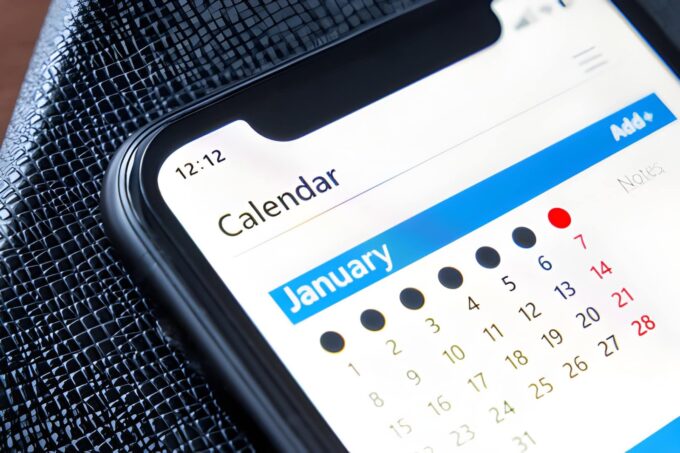
Time blocking gives you back control of your day. Instead of chasing everything, you decide ahead of time what’s essential and focus on it.
It’s a simple method that requires only two things: the discipline to stick to your plan and a tool to make the process easier.
Let’s explore some of the best time blocking apps to help you put your plans into action.
1. Google Calendar
Best For: Beginners and anyone looking for a simple, no-fuss time-blocking tool.
Price:
- Free for individuals with a Google account.
- Check pricing for paid plans
Chances are, you’ve already used Google Calendar. It’s free, simple and almost accessible from any device, which makes it a smart choice for anyone who values efficiency and simplicity.
What I Love:
I love that you can color-code events. It may not be a big feature, but it brings life to productivity. Who said task management had to be boring?
Google Calendar integrates easily with other Google tools like Meet and Gmail. If you get an email about a meeting, you can add it directly to your calendar in seconds. I also love that you can share it with colleagues to avoid scheduling conflicts.
What Could Be Better:
While it’s great for scheduling, Google Calendar lacks built-in task management or productivity tracking. You can’t measure how you performed on your blocked times unless you check back manually.
We understand that it may not be its primary function, but better built-in focus and productivity tracking features would make it even stronger.
2. Microsoft Outlook Calendar
Best For: Users who prefer Outlook over Google’s ecosystem
Price: Check pricing
For those who don’t fancy Google Calendar, Microsoft Outlook Calendar is the next best alternative. This is a polished and professional app that integrates easily with the entire Microsoft 365 suite.
It’s a big win if you already live inside Outlook for email. Everything is connected, and you can smoothly switch between emails and the calendar.
What I Love:
The polished layout of Outlook gives it a clean and professional look. Plus, it integrates with Teams and Outlook Mail easily. Scheduling meetings becomes a breeze, and you can even check colleagues’ availability before sending invites.
What Could Be Better:
If you are only after a personal time blocking app, you’ll find Outlook Calendar heavier than necessary. Also, some of its advanced features are locked behind a paid plan. Not exactly the best news for those looking for a free tool.
3. Sunsama

Best For: Professionals and freelancers who want a guided approach to time blocking.
Price: Check pricing
Sunsama combines calendar scheduling and task management in one simple flow. It’s for those who want to block their time and still keep an eye on their to-do list.
What I Love:
The app feels like a daily ritual. It nudges you each morning to review your tasks and decide what you’ll focus on. It also integrates with tools like Google Calendar, Asana, Todoist and Trello, so everything stays connected.
What Could Be Better:
Sixteen bucks a month for a blocking app is expensive, especially if you’re not planning to use it daily. Moreover, it’s simple, which is great, but it lacks advanced team features you might expect at that price point.
Overall, if you can get past the subscription price, Sunsama is an incredible time blocking app worth trying.
4. Todoist

Best For: Organizing tasks by project or priority, then time blocking them.
Price: Check pricing
Todoist is a popular productivity app, and for good reasons. It’s not designed entirely to be a calendar-first tool like Sunsama or Google Calendar, but it’s surprisingly effective for time blocking.
What I Love:
Todoist lets you capture every little task without clutter. Its filters, labels and priority flags help you see what matters the most.
Plus, you can connect it to Google Calendar where your tasks show up as actual time blocks, giving you a smooth workflow.
What Could Be Better:
Todoist is a task manager app first. So, time blocking isn’t its core strength. You’ll have to pair it with a calendar for the best experience. But you can’t do this with the free version, and need to upgrade to the paid Pro.
5. Motion

Best For: Busy professionals juggling meetings and tasks who don’t want to waste time manually planning their schedules.
Price: Check pricing
I was blown away when I first tried Motion. It feels a lot like having a personal assistant working quietly in the background. It automatically schedules tasks into available time slots and makes sure nothing slips through the cracks.
What I Love:
I love the app’s task automation. As much as it’s not perfect, it significantly reduces the time needed to map everything out. And since it’s integrated with Outlook and Google Calendar, you don’t need to switch systems.
What Could Be Better:
Traditional task managers are free. So, Motion can feel a little pricey, especially if you don’t plan to fully utilize its AI scheduling features.
Also, as good as it is, the automation isn’t perfect. It will at times get things wrong and you may be forced to drag tasks around manually.
6. TickTick
Best For: Calendar blocking, task management and reminders.
Price: Check pricing
Not to be confused with TikTok, TickTick helps users organize their days with precision. It combines calendar, task management and reminders in one.
The app stands out for its balance between simplicity and advanced features, making it suitable for casual users and productivity enthusiasts.
What I Love:
First, you get a built-in Pomodoro timer for a practical productivity touch without the need for a separate app.
Second, its calendar view lets you drag and drop tasks into their time slots for easy time blocking. And finally, its habit tracker is a nice bonus for those trying to build consistency.
What Could Be Better:
Most of TickTick’s useful features are locked behind the premium plan. You’ll feel very limited when using the free version.
7. Notion

Best For: Customizing productivity to handle tasks, notes and time blocking in one place.
Price: Check pricing
Notion is an all-in-one workspace for organizing almost anything. It’s not primarily for time blocking, but its flexibility allows you to design custom calendars to fit your workflow.
What I Love:
Notion’s layouts are highly customizable. You can create a daily, weekly or even monthly time blocking system exactly how you want.
The app integrates with tools like Google Calendar, which makes it great for collaboration in teams.
What Could Be Better:
Given all its features, the app can feel overwhelming if all you are looking for is something quick and simple to set up. Also, it may take time to figure out how everything works.
All in all, users who enjoy flexibility and customization will love Notion. Yes, it’s not the easiest app to set up, but once you’ve set everything up, it becomes a powerful tool that can replace multiple apps.
8. ClickUp

Best For: Individuals and teams that want all-in-one project management.
Price: Check pricing
We all love ClickUp for its versatility. It’s an app that lets you merge everything into one space. It comes with a built-in calendar and scheduling features, which make it great for time blocking.
What I Love:
You don’t need separate apps for tasks and calendars when you’ve got ClickUp. Everything is in there. There is an automation feature to plan and schedule work for you and reduce repetitive scheduling. Add that to its views, and time blocking becomes very visual.
What Could Be Better:
ClickUp is powerful, yes, but at times it can feel overloaded with options. This is especially the case if you only want a simple task or calendar manager.
9. TimeBloc
Best For: Anyone looking for a straightforward time blocking tool.
Price: Check pricing
TimeBloc is designed with simplicity in mind. It has a minimalist design for those who want a no-nonsense scheduling tool. No complexities of full project management apps, just an app to plan your day in time blocks.
What I Love:
The beauty of the app is how easy it is to use. Its interface is minimal, which means you can map out your day without overthinking. It also works well for building consistent routines since you can repeat blocks for daily or weekly habits.
What Could Be Better:
On the flip side, its simplicity is limiting. Unlike most advanced time-blocking apps, TimeBloc offers limited integration with calendars and task managers.
It lacks the flexibility of advanced options.
10. Clockify

Best For: Combining time blocking with tracking.
Price: Check pricing
Clockify is known primarily as a time tracker, which makes it a little different. But it’s excellent for combining time blocking with tracking. The app is particularly popular with freelancers and teams who need to track billable hours.
What I Love:
Clockify stands out for its balance between planning and accountability. You can schedule your day and log your hours, then later generate detailed reports to see how you spent your time. For professionals, this is also great for client billing.
What Could Be Better:
The app leans more toward tracking than planning, as that was its intended purpose. It may, therefore, feel slightly overwhelming if you only want a clean time-blocking tool.
Other than that, Clockify is an incredible tool worth trying.
Take Charge of Your Time
Time blocking is less about the tools themselves and more about how you use them. The app is simply a partner to follow you through.
Try out a few of these apps, see which one suits you best, and stick with it. Once you take control of your time, you’ll be amazed by how much you can achieve.