We all get the same 24 hours. But we are surrounded by so much distraction that it’s easy to let time slip by.
One minute you are ‘quickly checking your phone’ and the next it’s 4 p.m., you’re tired and your to-do list is still untouched.
Time management doesn’t necessarily mean waking up at 5 a.m. (although this helps). It’s about making the most of our limited time and moving the needle on things that matter.
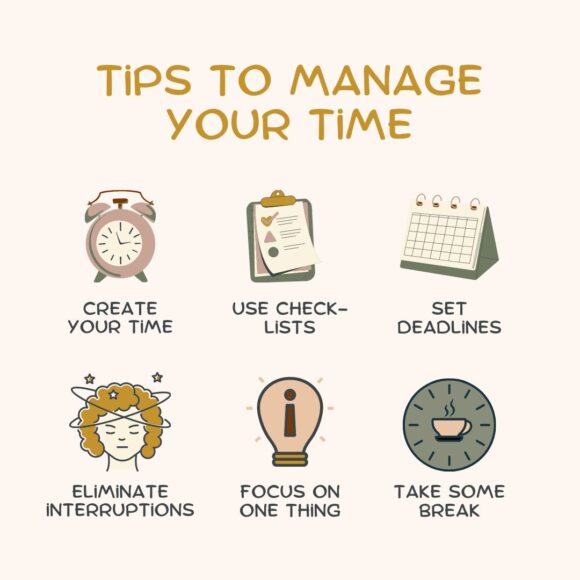
Consider these simple and practical time management tips to get more done every day without missing out on life.
1. Plan the Night Before
You’ve likely heard of this advice before, nodded at it, but never actually followed it. Planning your day the night before is a small habit that makes a massive difference.
Your mind goes into reaction mode when you wake up in the morning without a plan. You check your phone, skim emails, and react to whatever’s loudest. It’s the easiest way to lose half your morning.
You flip this by planning the night before. So that when you wake up, you already know what to do.
Before crawling into bed, spare five minutes to journal down what tomorrow needs from you. It doesn’t need to be a detailed list; just the important stuff.
‘I’ll send three cold pitch emails and read five pages of this book.’
By the time you sit down in the morning, you already have the momentum to begin. Plus, it’s oddly calming to unload your brain before sleep.
2. Eat the Frog
The Eat the frog technique is about tackling the most difficult and gruesome task first, usually in the morning.
Your frog is that proposal you keep ‘researching’ instead of writing, or the email you’ve been putting off because it’s awkward.
It’s the task that carries the most emotional weight and likely leads you to procrastinate. So, you dodge it by doing the low-stake, easier stuff first.
Tackle the hardest task first when your energy is highest and your brain is freshest. Once you’re done, everything else becomes easier and less intimidating.
3. Time Block Your Calendar
Unlike what most people think, time blocking isn’t rigid. If anything, it helps you make decisions. Instead of asking, ‘What now?’ Time blocking will have solved that in advance.
When you time block, you map your day the way you want it to flow.
Even when the day goes off-script (it will), simply move the block and continue with the next task.
4. Don’t Multitask

Multitasking feels productive, looks productive, but is neither. Every time your brain jumps back and forth between tasks, it costs you time and energy. This adds to hours of lost focus.
Focus on one thing at a time, and only move to the next once you’re done. You’ll likely get work done faster, better, and with less stress.
At the end of the day, it’ll surprise you how much you can get done by single-tasking.
5. Batch Similar Tasks
The idea behind task batching is to group similar tasks together and handle them in one go. Because tasks can feel like they take forever when scattered throughout the day.
Sit down and answer all emails in a 30-minute session and make all your phone calls back-to-back.
You can then shift your focus to deep work without constantly getting interrupted by tiny tasks.
6. Delegate Whenever Possible
Not everything deserves your time and attention. Whenever you can, delegate less important tasks so you can free your time for the things only you can do.
It doesn’t necessarily have to be formal. It can be as simple as asking a teammate to handle some simple research. Or better yet, automating repetitive tasks.
7. Limit Distractions
Distractions slow you down, no doubt about that. Those random phone pings and notifications make you lose your sense of progress.
Fight them off to remain productive. Close non-essential tabs and silence unnecessary notifications. You can even take advantage of focus apps.
It also helps to redesign your environment. Keep only what you need on your desk and signal to yourself that this is your focus time.
8. End With a Quick Review
At the end of the day, before you rise from your desk, take a moment to review your day: what did you manage to do, what didn’t get done, and what do you need to move to tomorrow?
I started by suggesting you should begin your day by planning the night before. This review can be the perfect opportunity for that.
A quick review highlights your wins and gives your brain a clean break so you don’t carry mental baggage into the next day.
Try Again and Again
Time is already running, so you might as well run it.
Remember, not all days will be perfect. Plans will fall apart and distractions will occasionally win. That only means you’re human.
Pick it up from there, try again tomorrow, and get better.